

Home / Services / Furniture Refinishing
Tabletops, cabinets, dressers & chair frames · Statewide in ConnecticutFurniture
Refinishing CT
Rings, haze, a flat top or edges rubbed bare. From Greenwich to Mystic, the requests for furniture refinishing CT owners send us cover three separate jobs, and only the costliest one takes the wood all the way back to raw grain.
Finish tested before quotingHand work on veneerCall (347) 310-7483

Three jobs go by one name
The word covers three different kinds of work. A coat that is whole but tired just needs a cleaning and fresh wax. A coat that has thinned without wearing through can be lightly sanded and topped up, since new finish grips the old layer. Stripping is only for a coat that has broken down. The lighter two jobs run a small share of what a strip costs, and many of the furniture refinishing CT requests that reach us never need a strip.

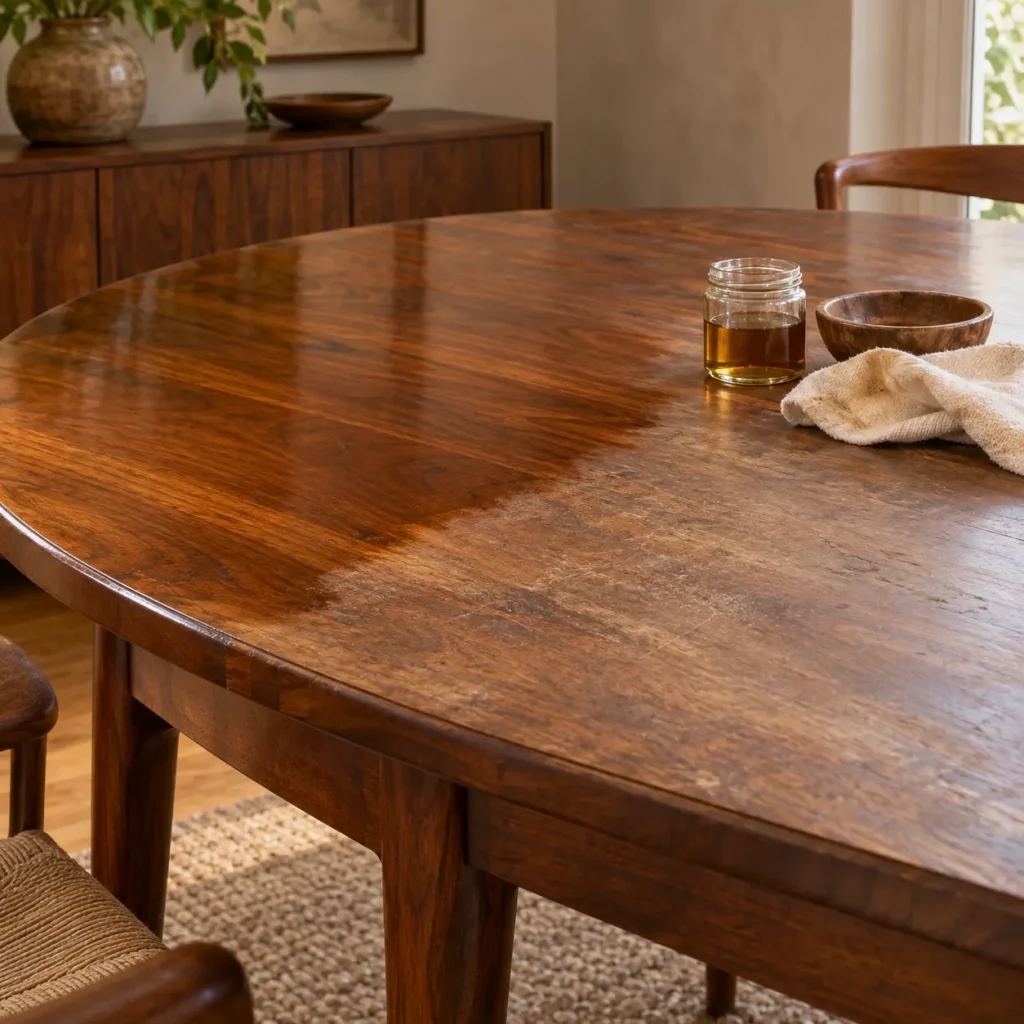
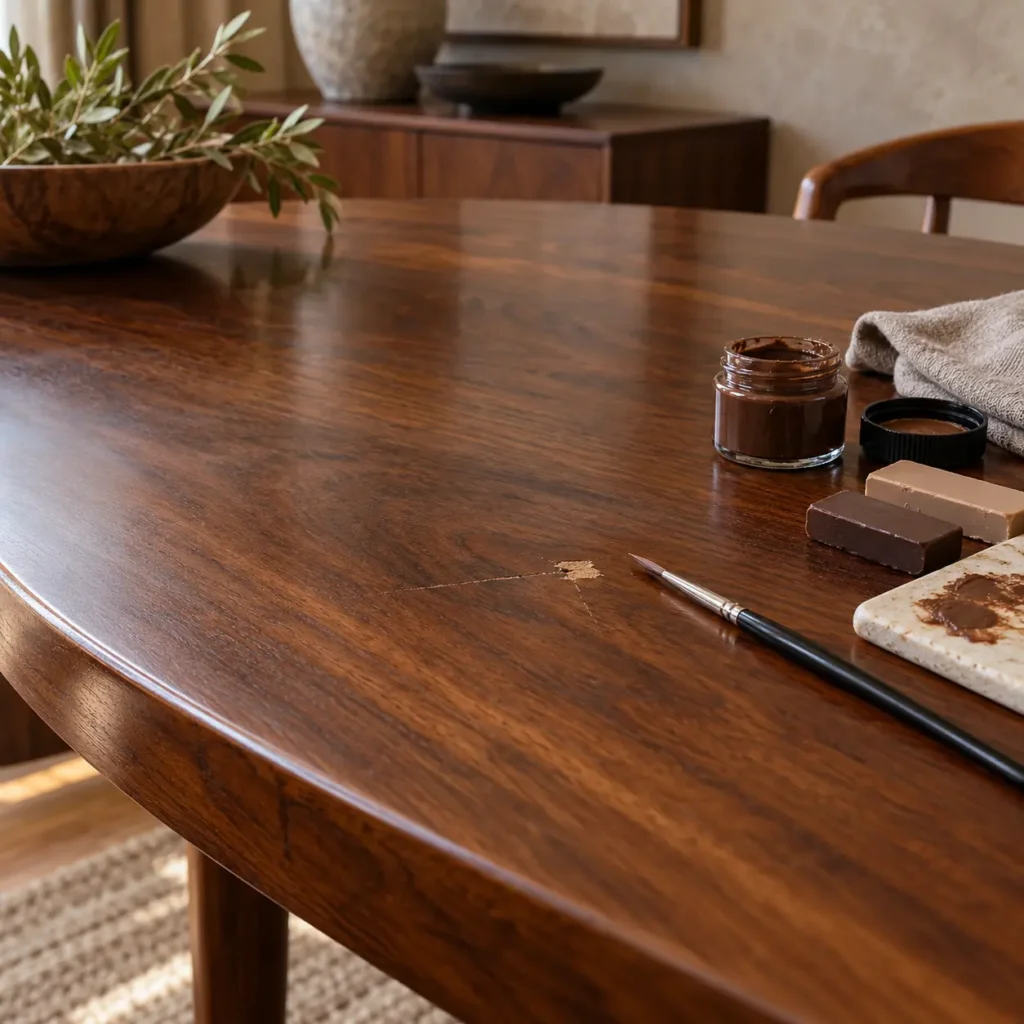

Tops, cabinets and frames
Tabletops are the hardest, since overhead light picks out every wave in the surface. Carved trim and turned legs take longest, because all of that is done by hand.





Find out what the finish is
A quick solvent check on a hidden underside settles the whole job. Some coatings can be dissolved and fused again; others can only be taken off. We ask about it first on every furniture refinishing CT quote.
Testing with solvents
 Alcohol finds shellacDab it on an out-of-sight spot. Tacky means shellac, which can be re-melted and fused rather than stripped.
 Thinner finds lacquerLacquer thinner softens lacquer the same way. Most mid-century American furniture was finished in lacquer.
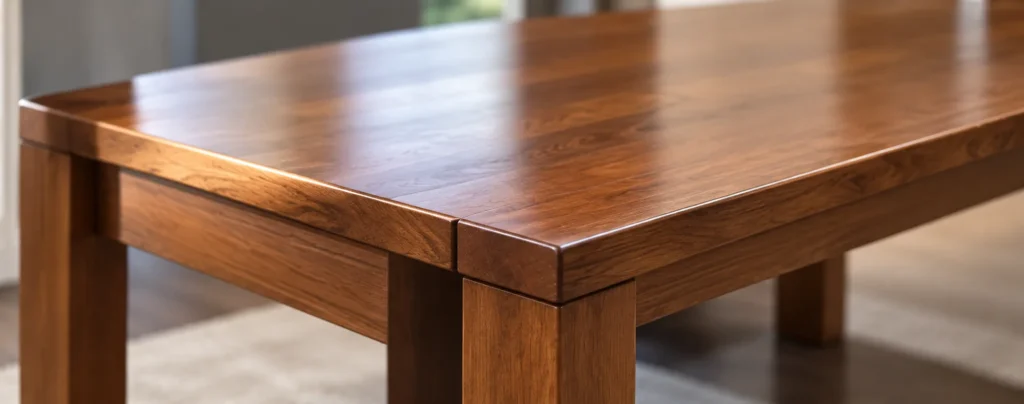 Neither means polyIf both solvents do nothing, the coat is catalyzed or polyurethane and must be removed.
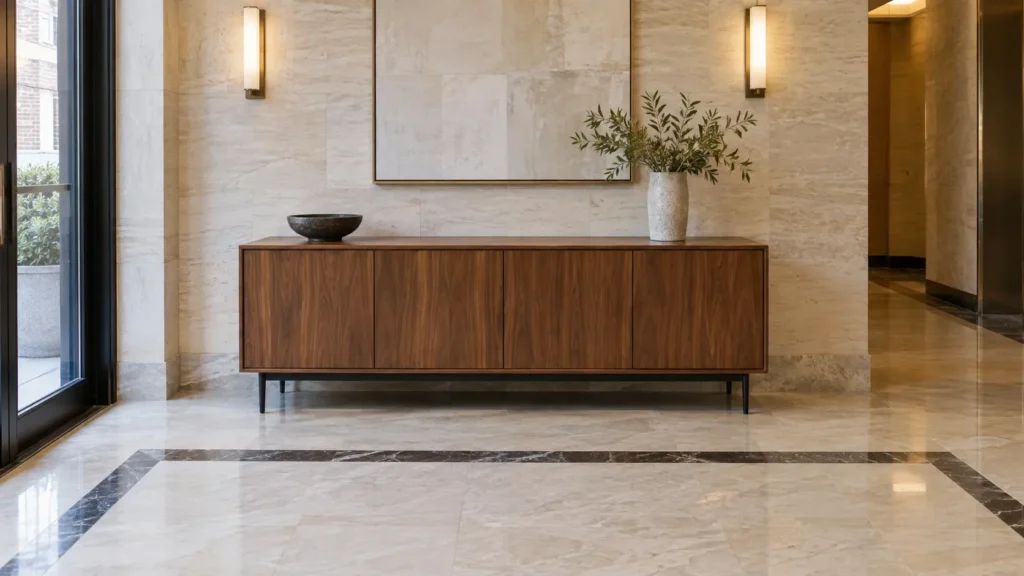 Oil and waxNo film on top at all. It gets fed and buffed, never stripped.
What we match to the piece
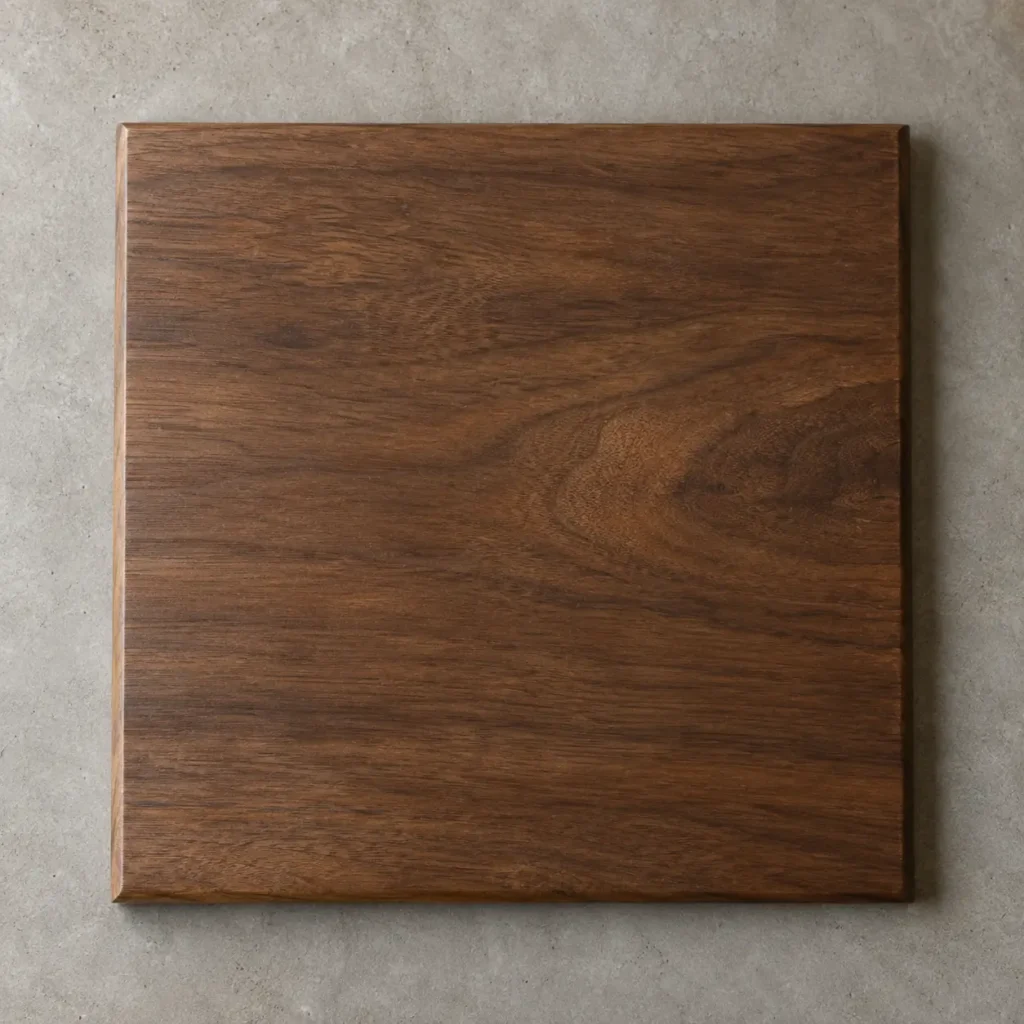 SheenFlat, satin or gloss, picked by looking at the piece instead of a sample card.
 ColorBlended, then tried on the underside before it goes on top.
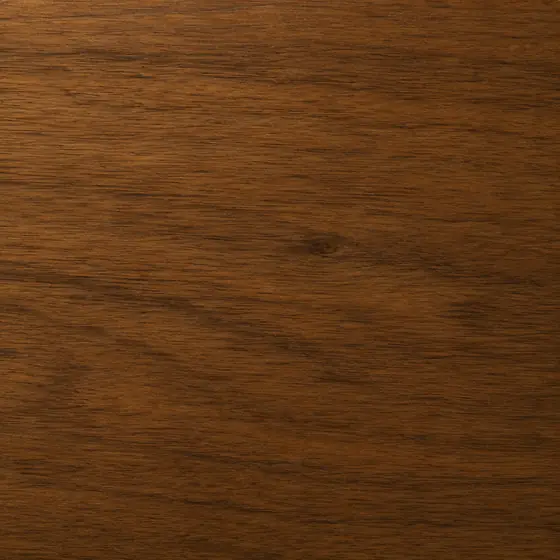 DepthBuilt in thin layers, since a single heavy coat is what crazes later.
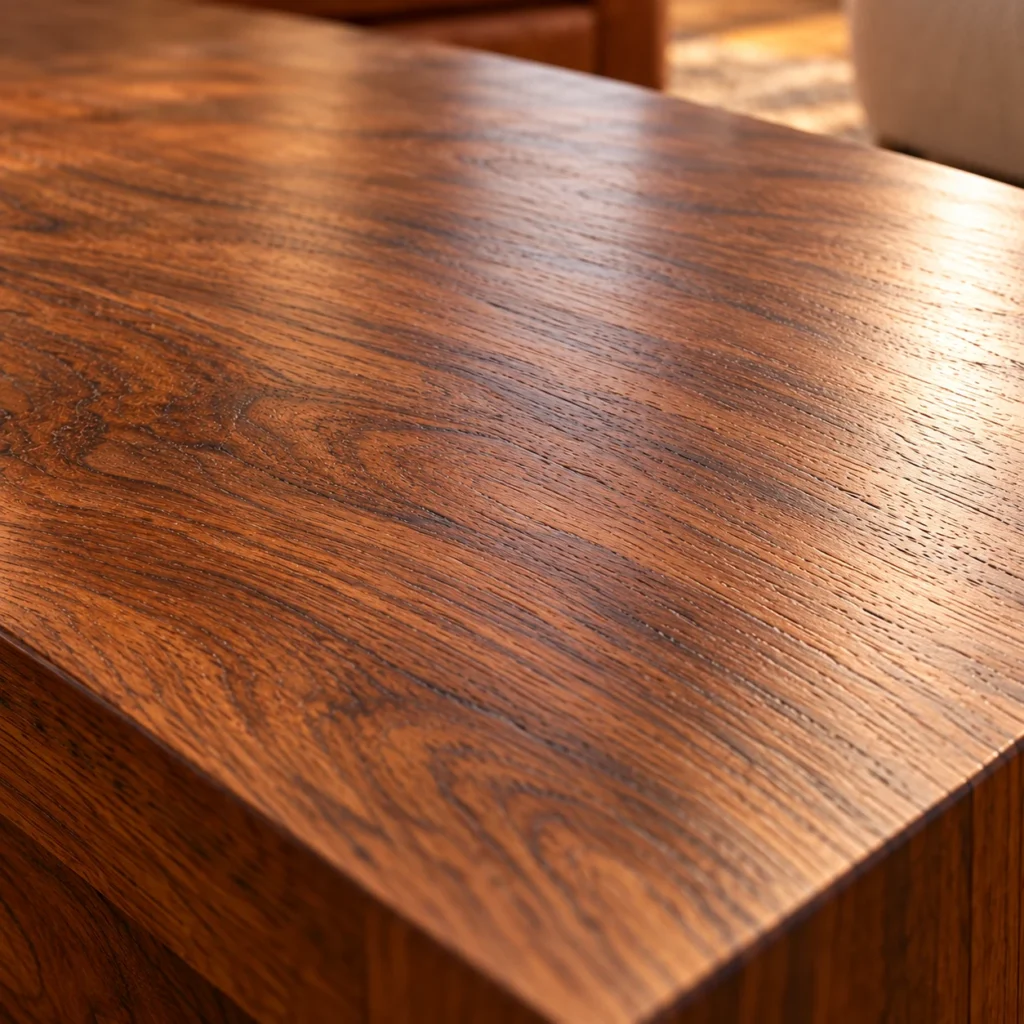 GrainOpen-grain oak and ash get filled or left open by choice.
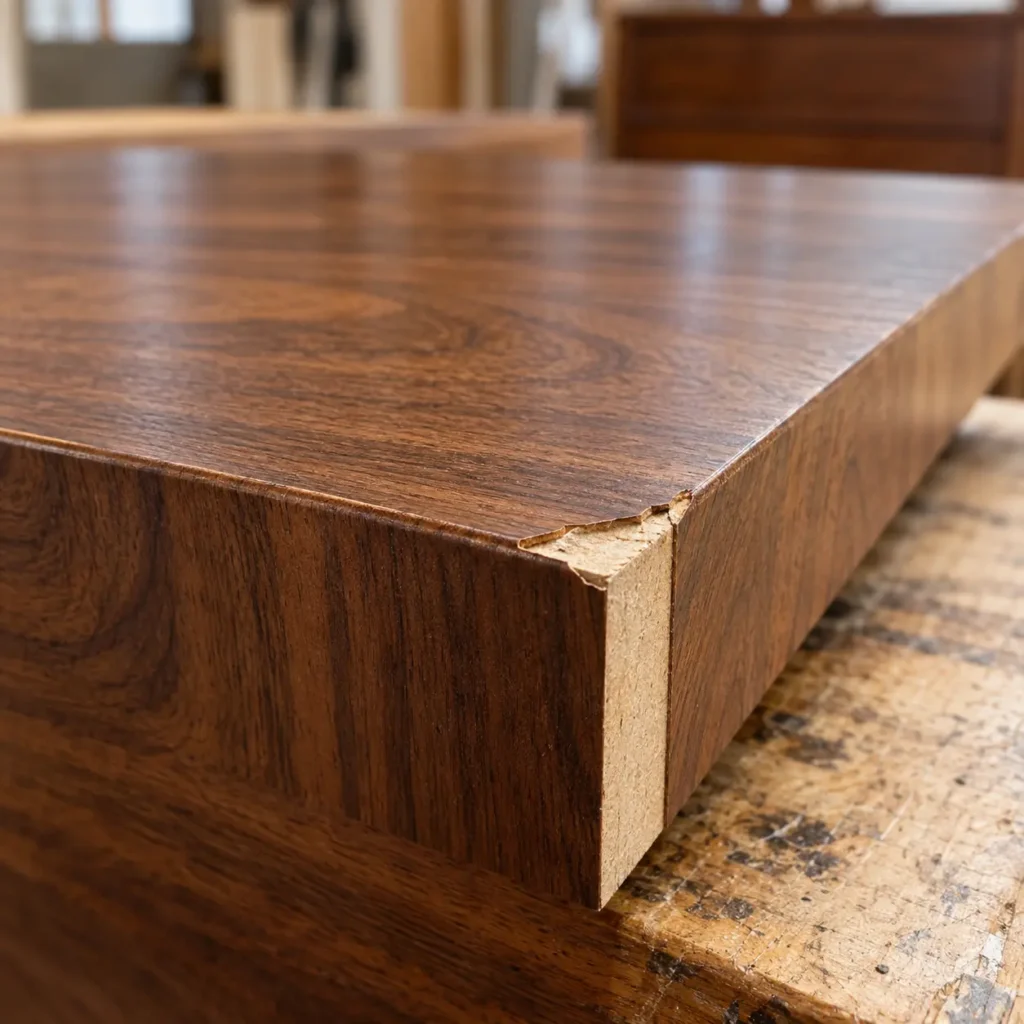
No power sander on veneer
The edge tells you which you have. Solid wood shows the same grain from face to back; veneer is a thin layer glued over a core. On most pieces made after the 1960s that layer measures 0.6 mm or less, and a power sander can cut through it in seconds. A sand-through cannot be disguised, since what lies beneath is core board or a different species. That is why veneer is stripped chemically, scraped by hand and sanded by hand along the grain.
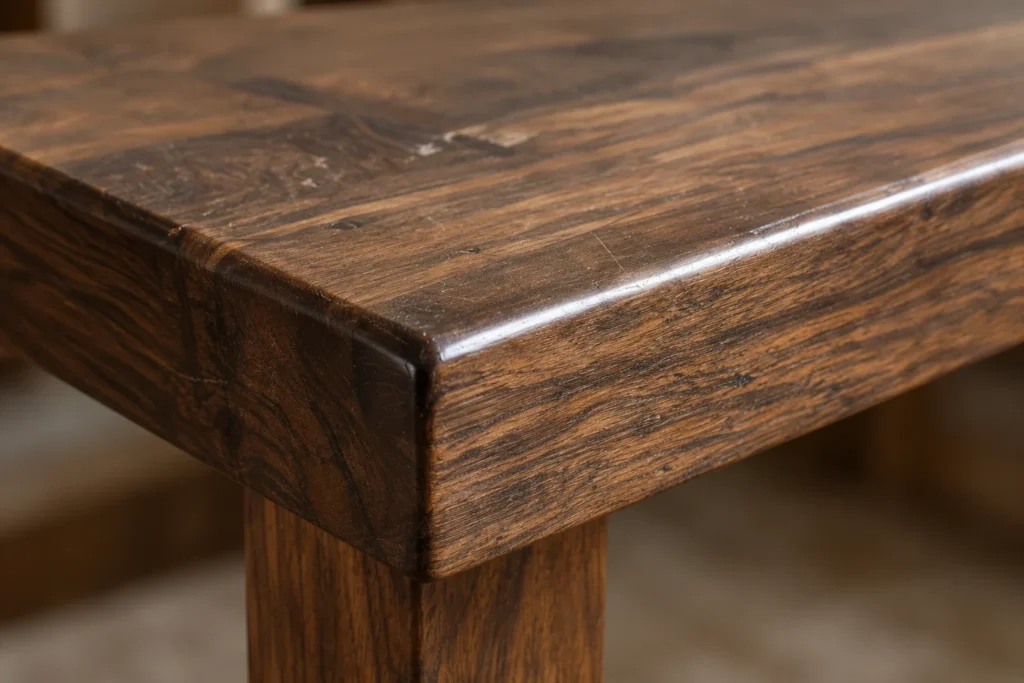
What a fresh coat cannot cover
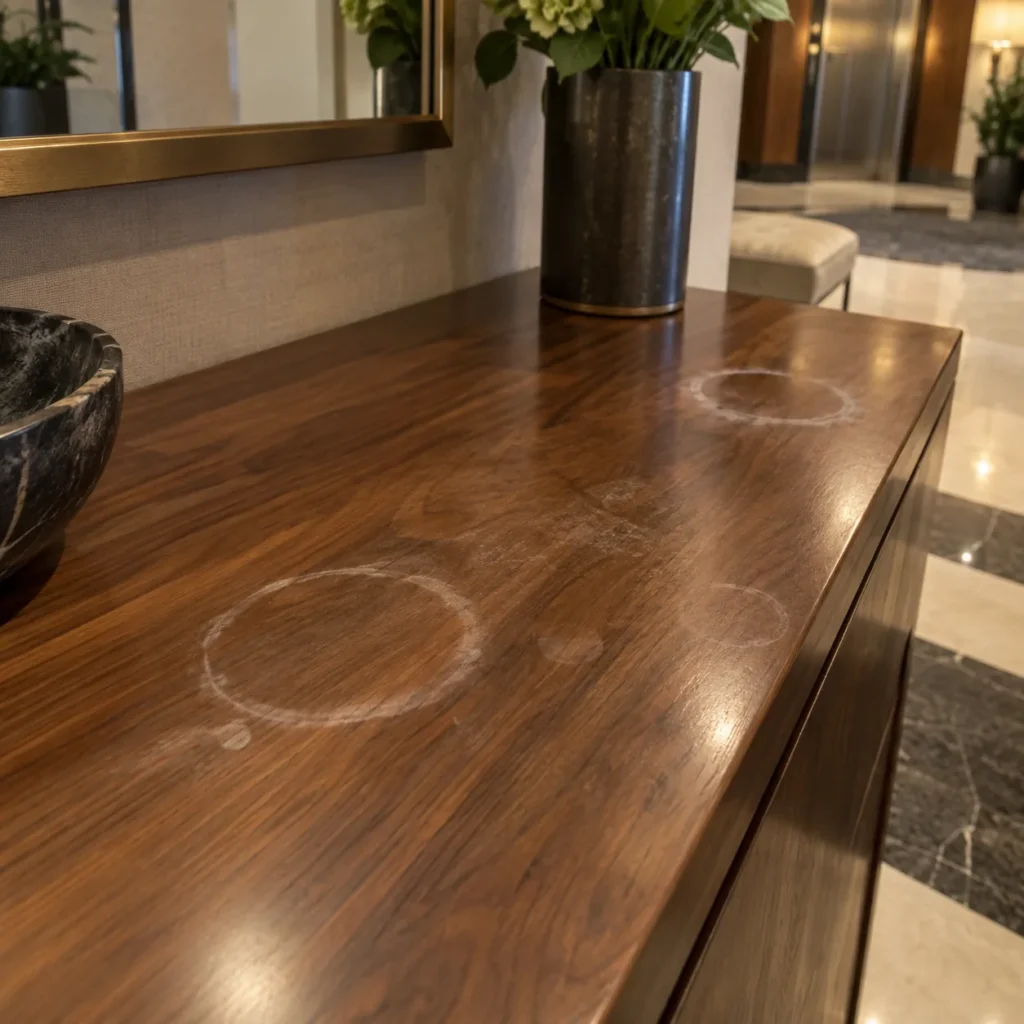
White rings are trapped moisture in the coating, and they often lift out without stripping anything. Black rings mean water got into the wood itself, and those still show through new finish. Chips, dents, scratches and loose joints belong to another service — see wood furniture repair.
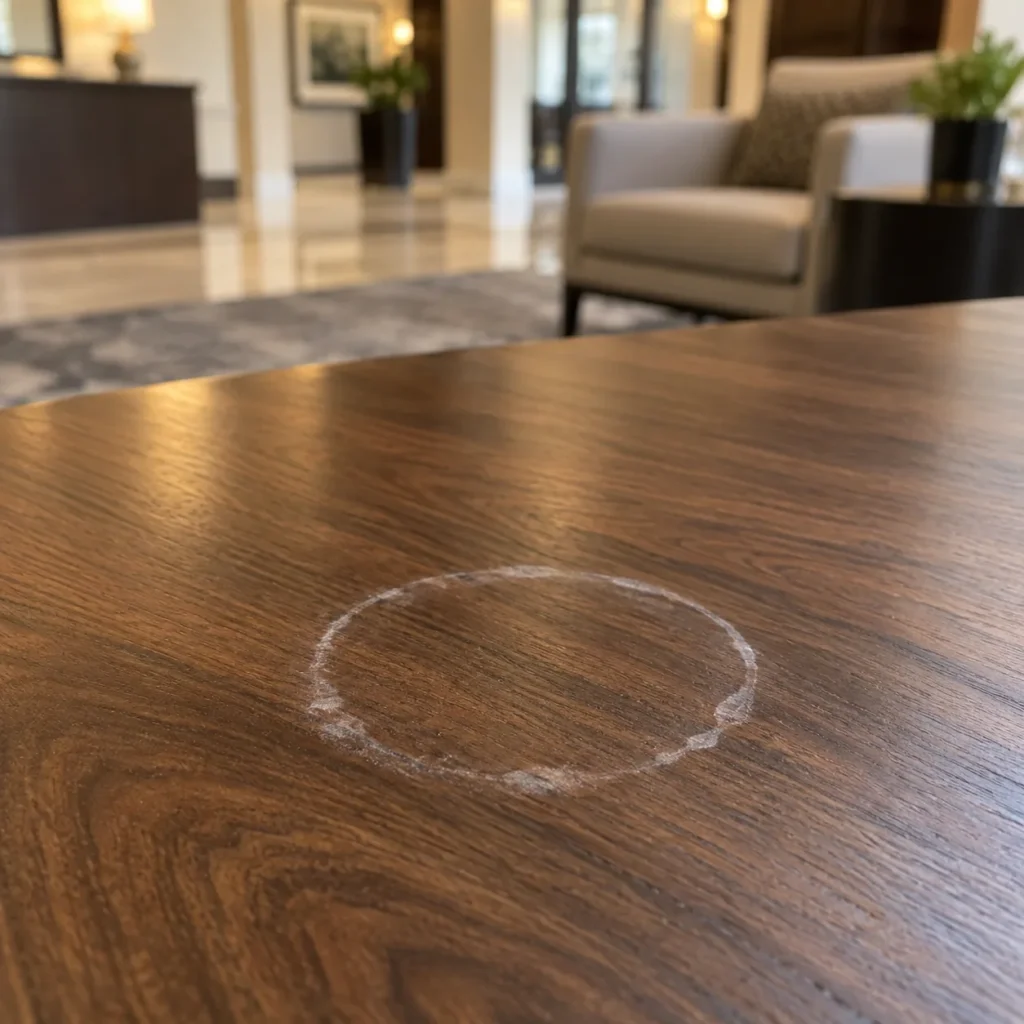 White ringsWater held in the coating, not the wood. Often lifted out without stripping.
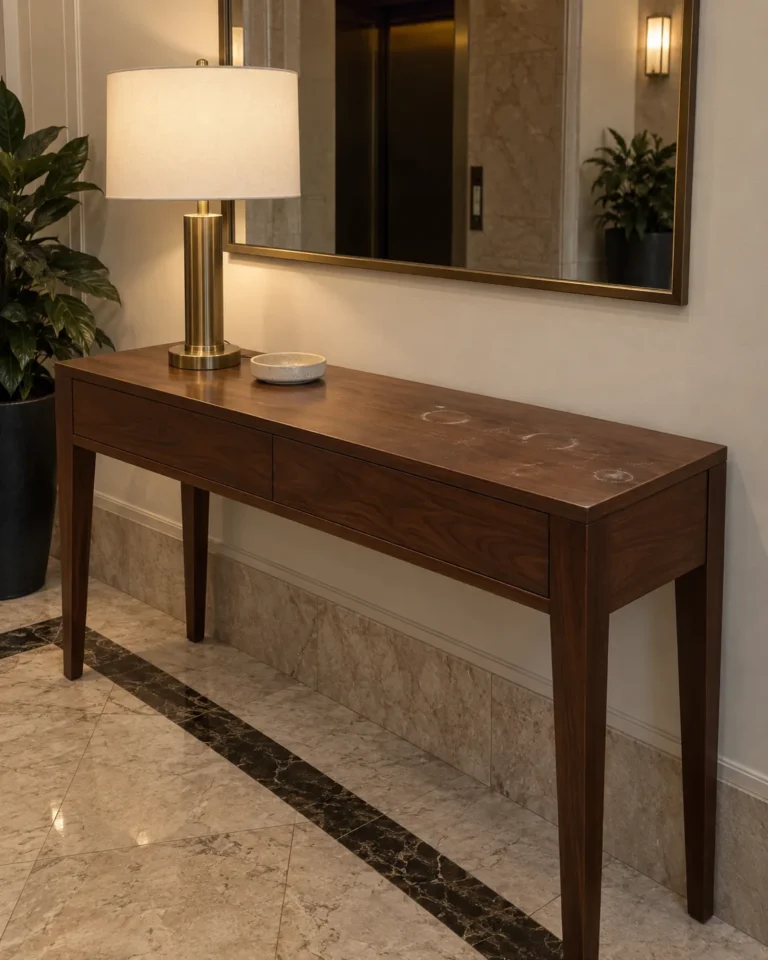
 Milky hazeSame cause as a white ring, spread across a whole panel.
 Black ringsWater got into the wood and reacted. A new coat will not hide it.
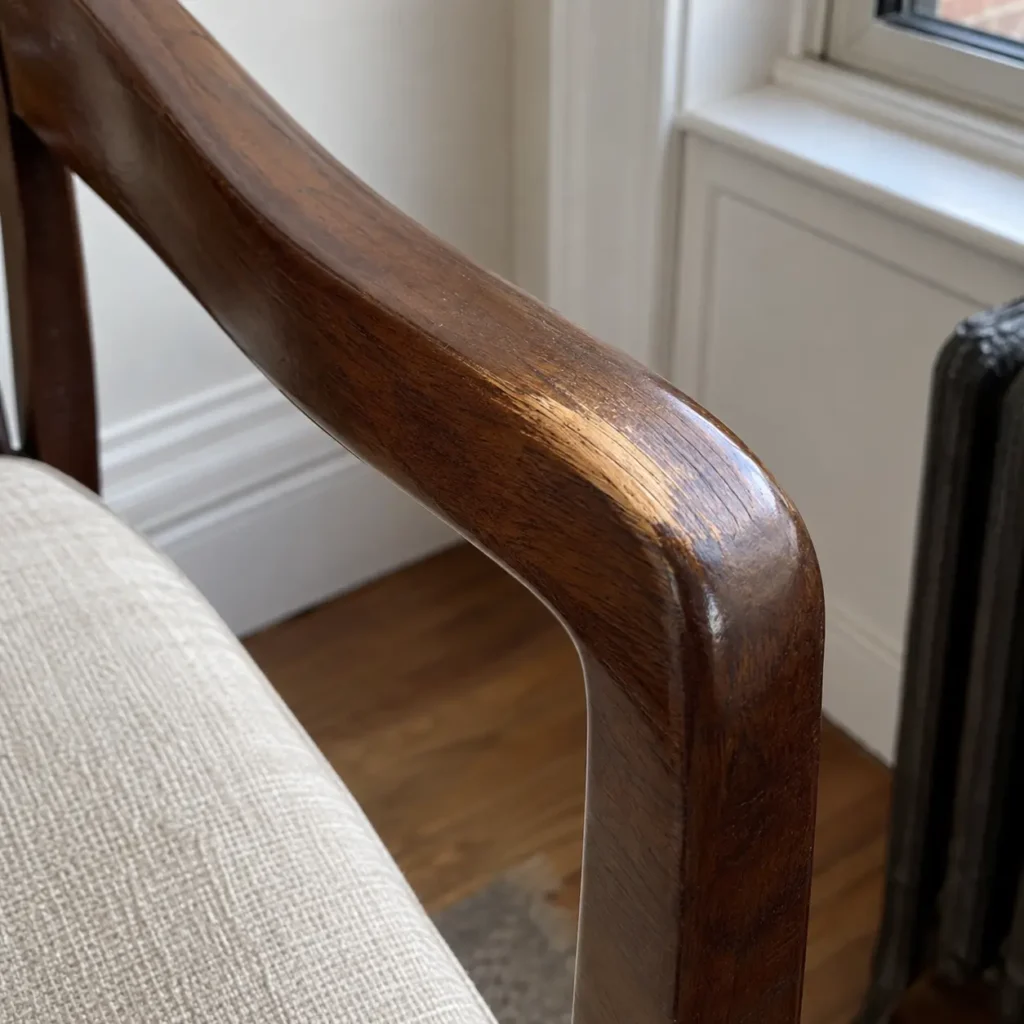 Bare spotsWhere the coating wore away, the exposed wood has aged to a different tone.
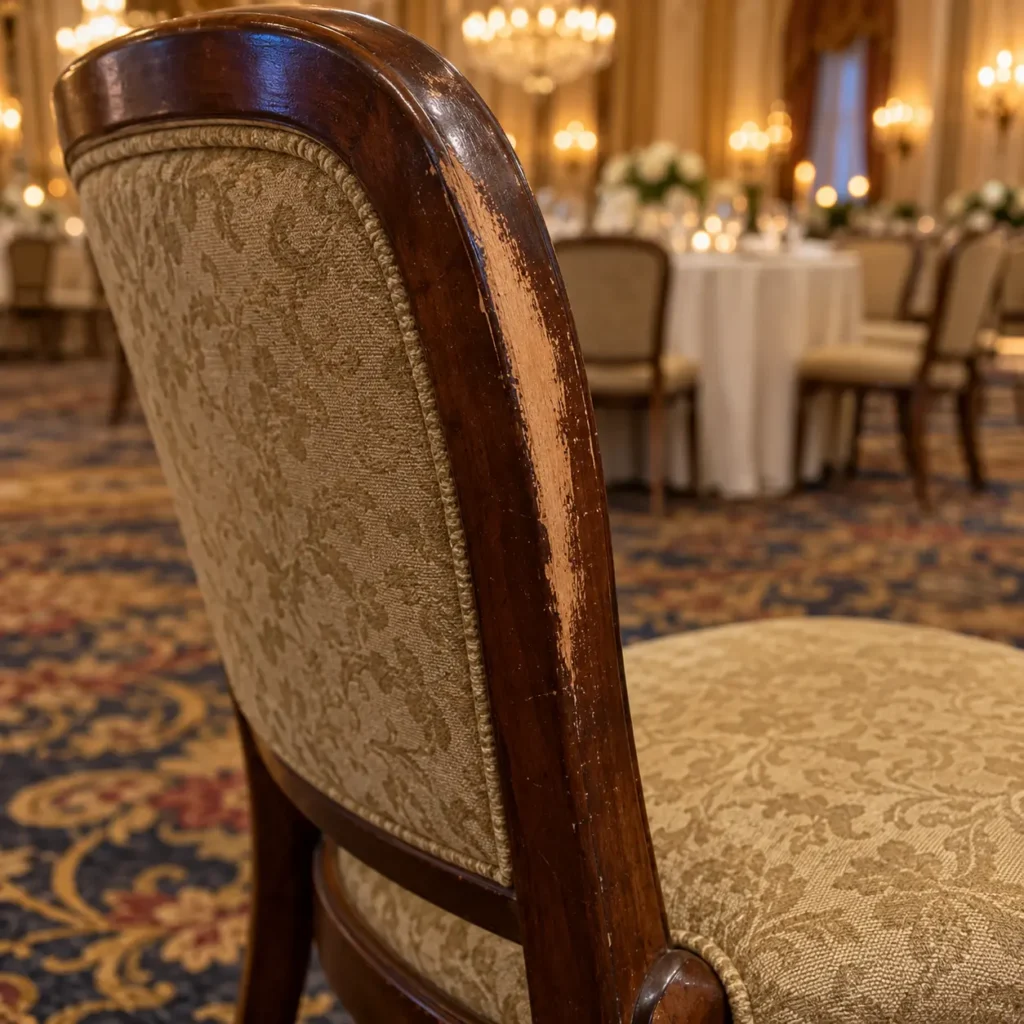 Rubbed edgesArms and rails wear first; recoating alone leaves a pale line.
The process, step by step
Photos first
The full piece, a close-up of the worst spot, and an edge if one is exposed.
Hidden-spot test
We walk you through the alcohol and thinner check. It takes a minute and settles which job it is.
One quote
A single number for the job the piece actually needs, not the largest one.
Done
Thin coats built to your chosen sheen, then cured before the piece goes back into use.
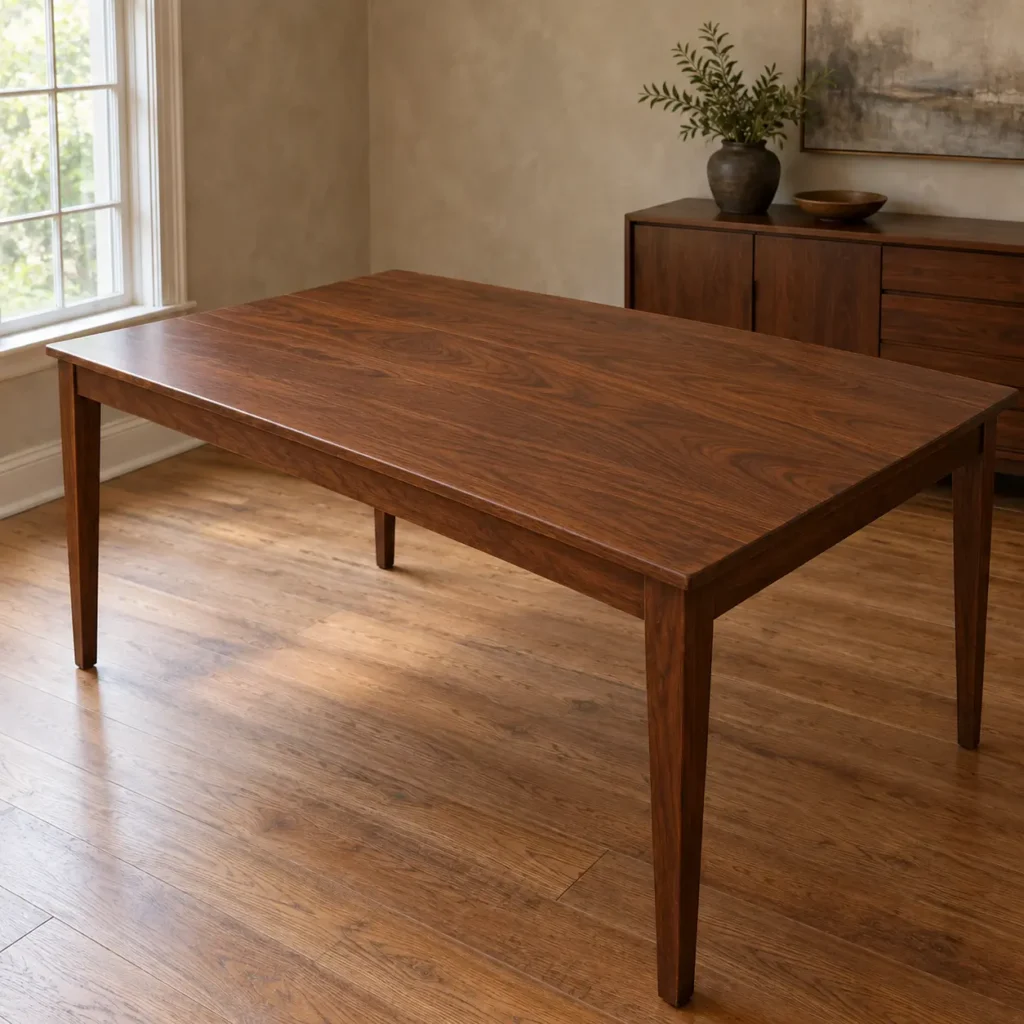
One table, a new finish
The whole top had turned hazy and carried two black rings. We removed the old coating, treated the rings in the wood itself, and rebuilt the finish in thin layers to a satin sheen.
Quote my piece
When not to strip
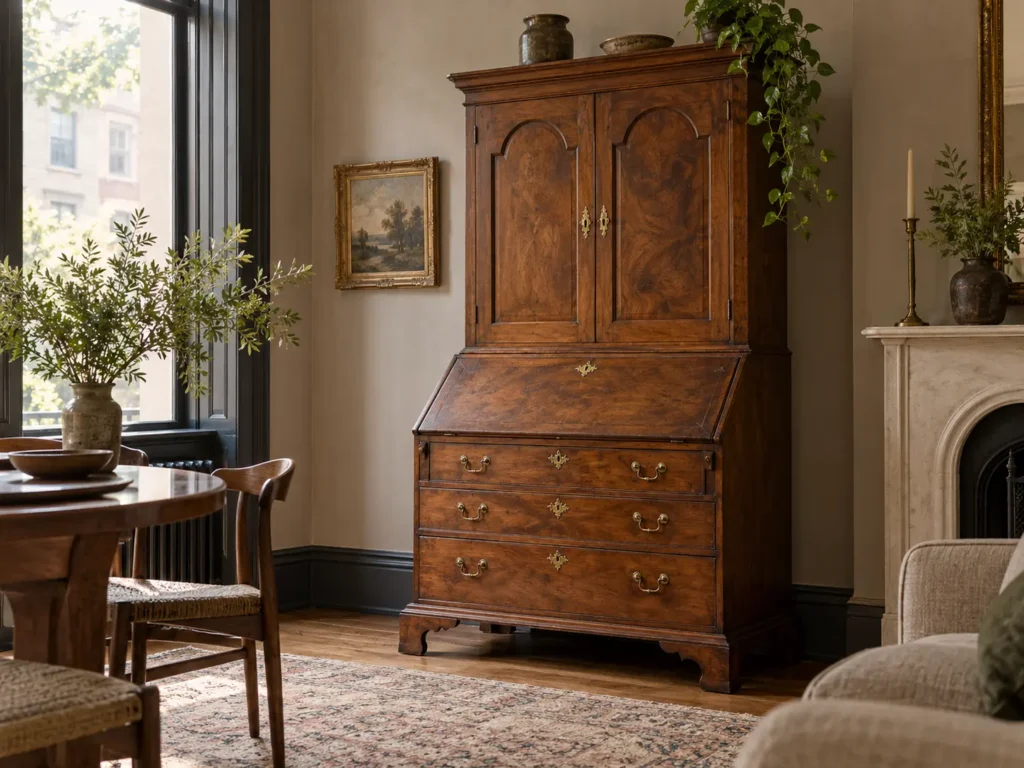
With an antique, the original finish is part of its value. When furniture refinishing CT owners regret a job, it is almost always a strip that was not necessary, and stripping is the one step in this work that cannot be reversed. Original shellac that is dull, crazed or ringed can nearly always be brought back without removing it, and we tell you that before we quote anything larger. Related: wood repair.
Furniture Refinishing CT FAQ
Common questions before you book.
Does every piece need stripping?
No, and most pieces should not be stripped. A sound finish gets cleaned and waxed; a thinned but unbroken one gets a light sanding and a new coat. Stripping is reserved for finish that has broken down.
How can I identify my finish?
Dab denatured alcohol on a hidden spot. If it gets tacky, it is shellac. If not, try lacquer thinner; tacky means lacquer. If neither solvent changes it, you have a modern catalyzed or polyurethane coating.
Is veneer safe to refinish?
Yes, when the work is done by hand. Veneer on later furniture is often 0.6 mm thick or thinner, so it never goes under a machine.
Can a white ring be removed?
In most cases. White rings are moisture held in the finish and can often be drawn out without stripping. Black rings have reached the wood and will show under new finish.
Is it a mistake to refinish an antique?
Often, yes. The original finish carries part of an antique’s value, and once removed it cannot be replaced. Dull or crazed shellac can nearly always be revived as it is.
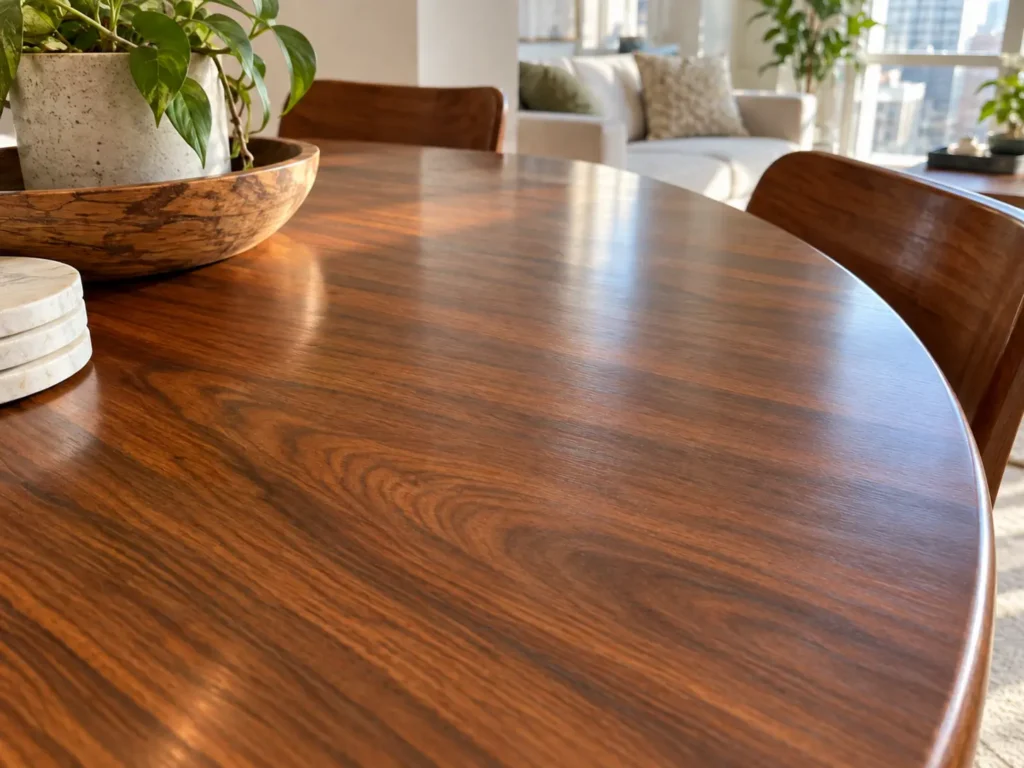
Photograph it before you sand it
A shot of the whole piece and one of the worst area is enough for us to tell which of the three jobs you need. We book nothing until you agree.
Or call (347) 310-7483 · office@leatherrestorepro.com