
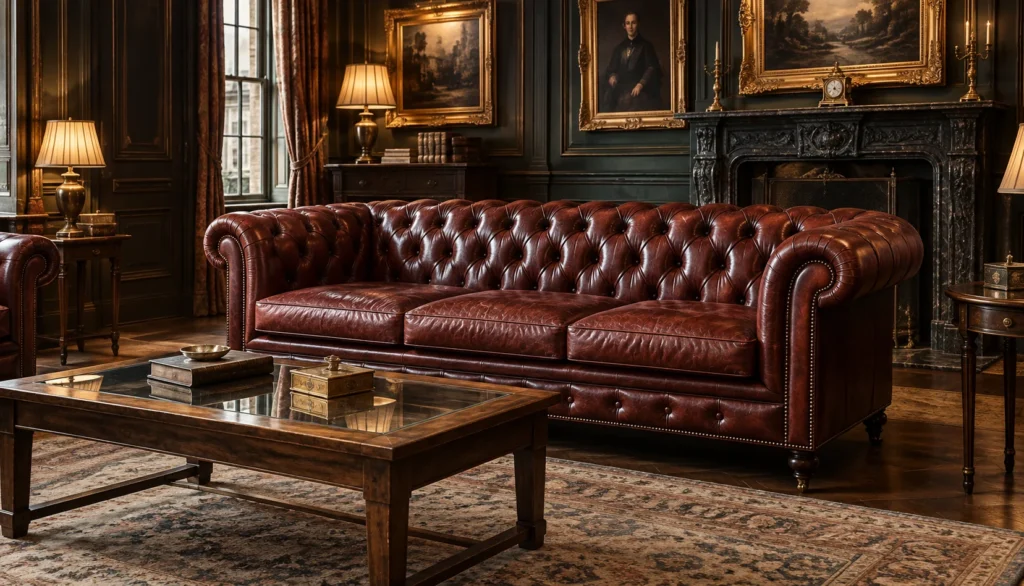
Home / Furniture / Antique Leather
Gentle work on old leather · ConnecticutAntique Leather
Furniture Restoration CT
We bring back Chesterfields, settees and club chairs without erasing their age. This is antique leather furniture restoration CT collectors and families can rely on: we clean, feed and mend the original hide, and we replace only the parts that can no longer hold.
Patina preserved, never painted overPhoto-based free estimateCall (347) 310-7483
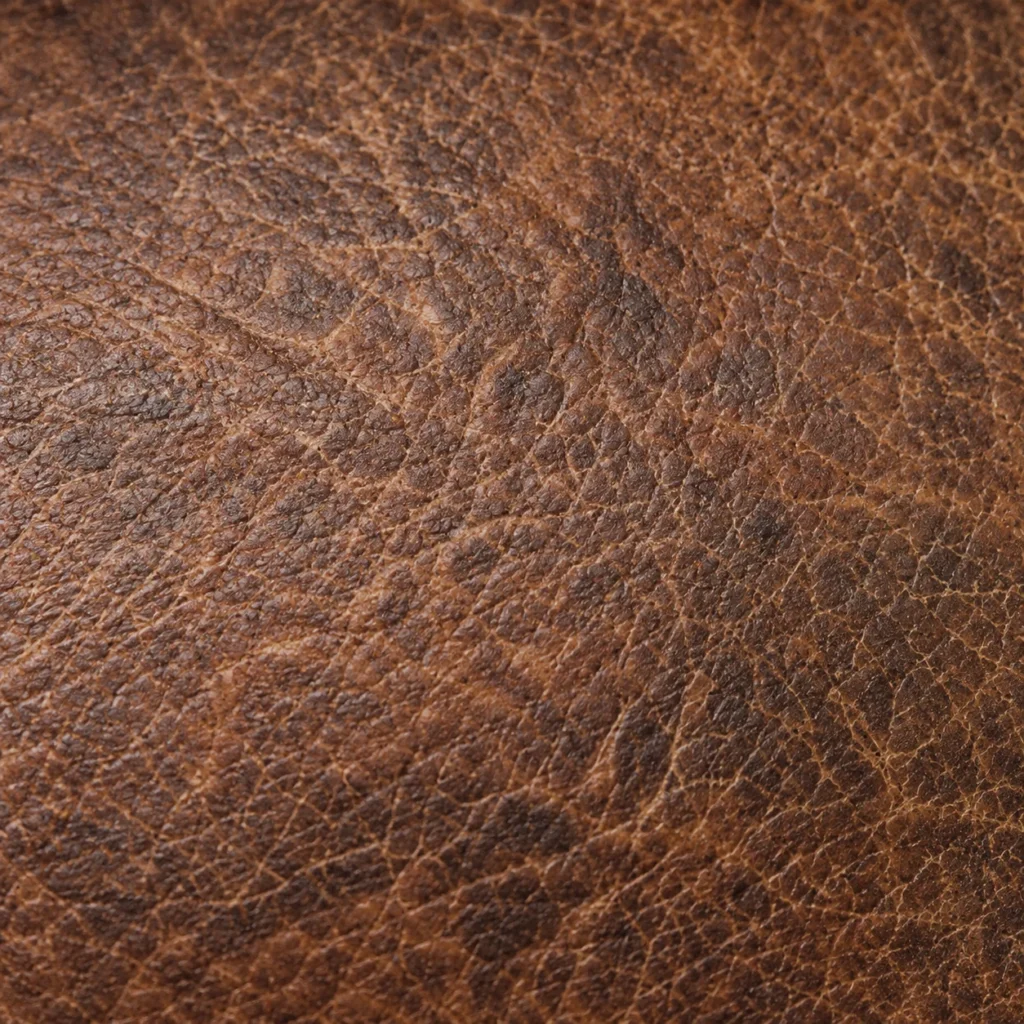
We restore. We do not refinish.
A modern sofa should end up with a fresh, uniform color. An antique is different: the darker arms, the gentle creases and the uneven tone belong to the piece. Good antique leather furniture restoration CT homes can count on begins with choosing what not to touch.
We want it to look well cared for at its age. We do not want it to look new.
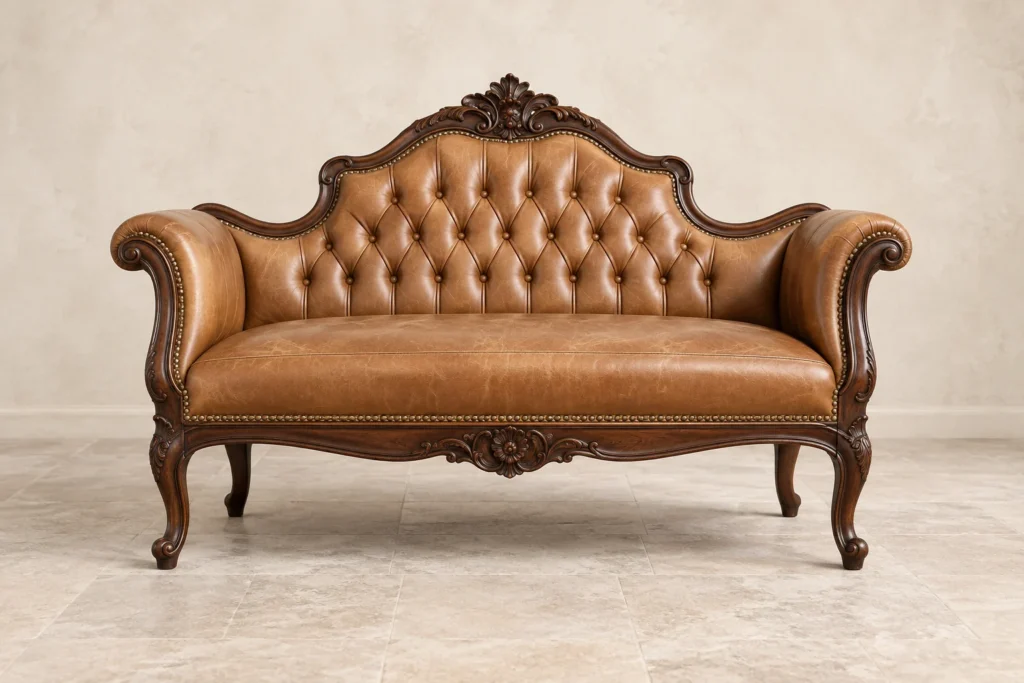
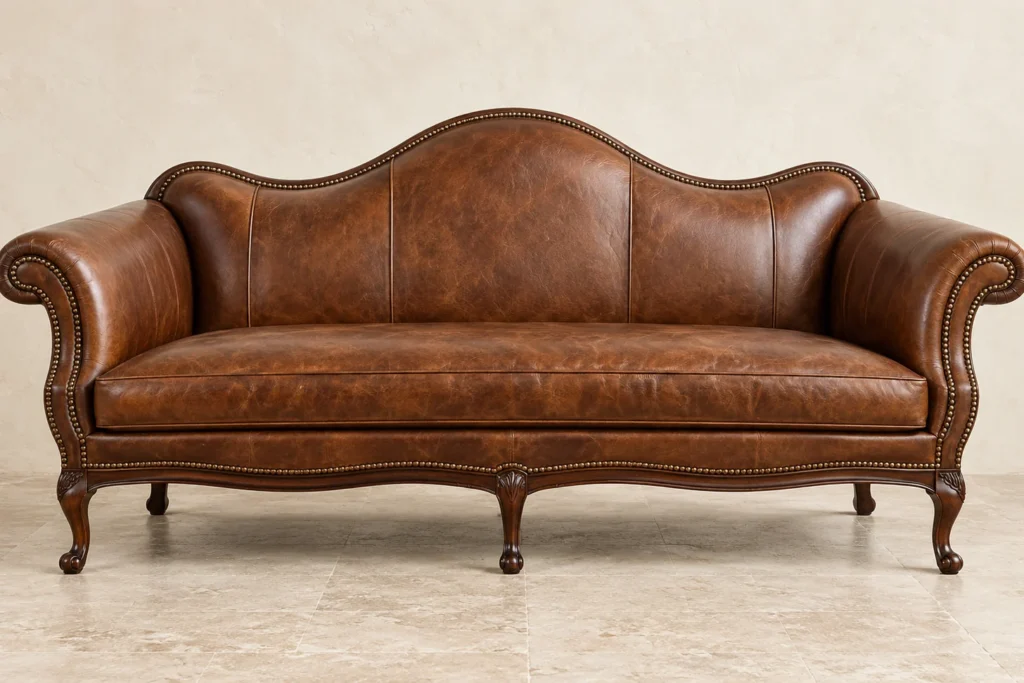
Antique seating we work on
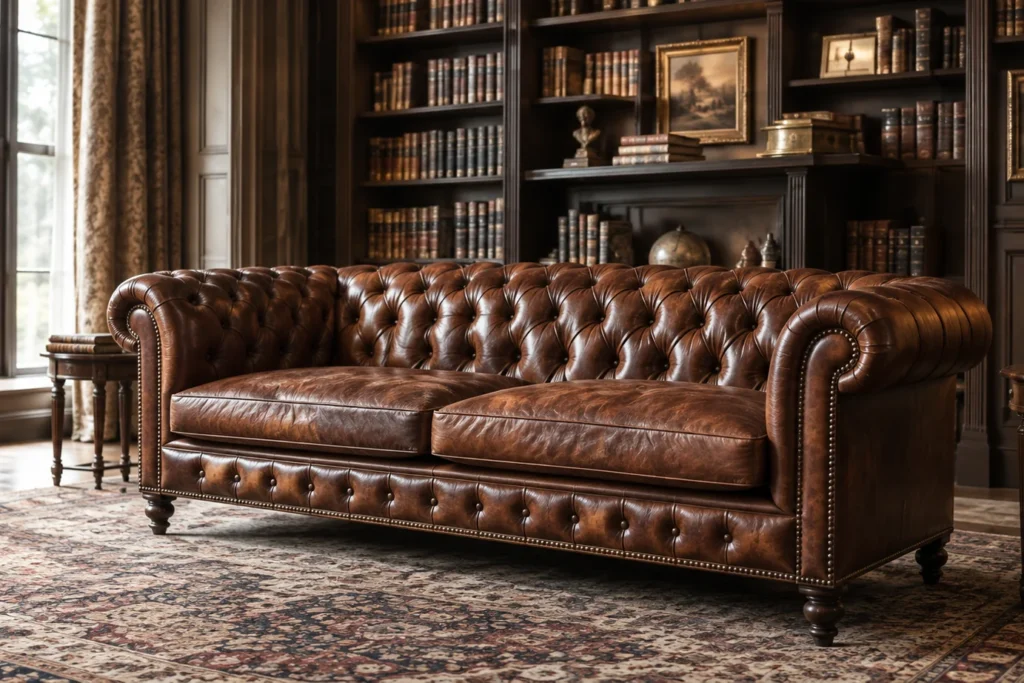
Most of it dates from the 1800s and early 1900s and came out of parlors, libraries and dens. Have something different? Send a photo, because no two antique leather furniture restoration CT jobs are quite alike.
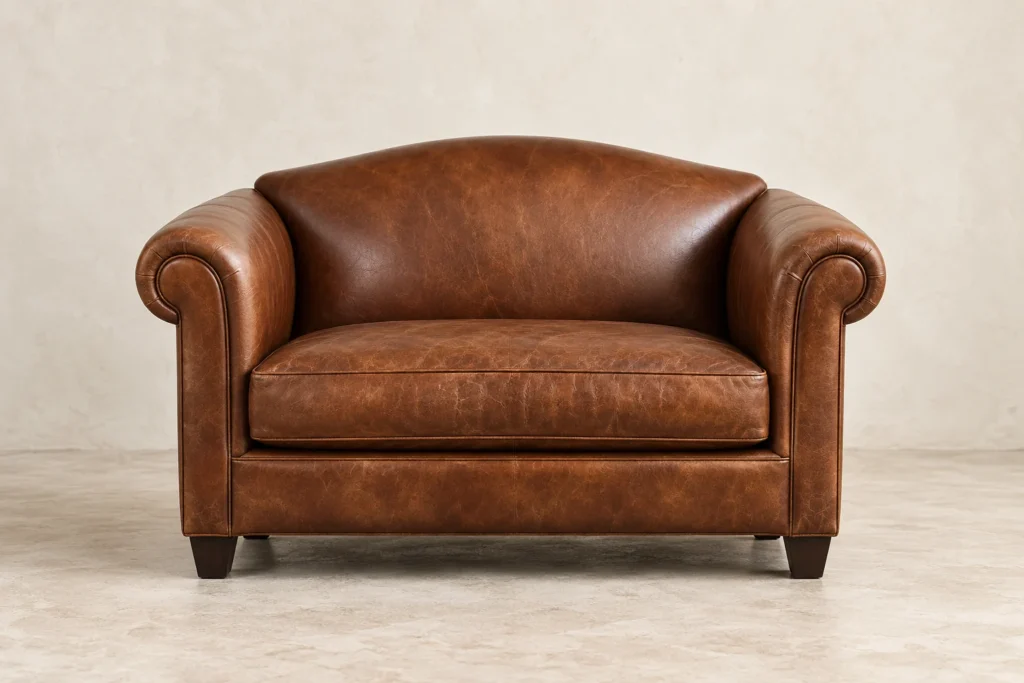
How decades of use show up
Old leather tends to fail in these six ways, and each has a mild remedy that leaves the original hide where it is.
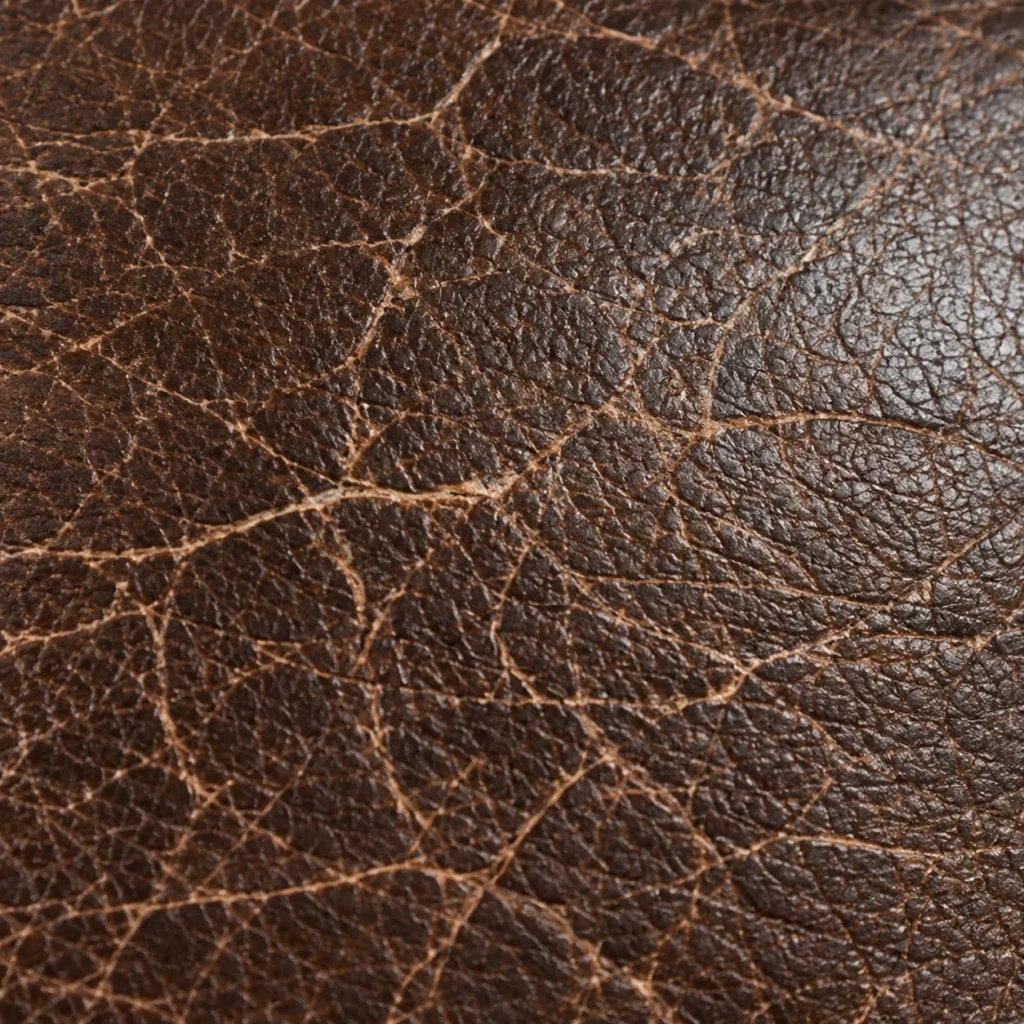
Crazing
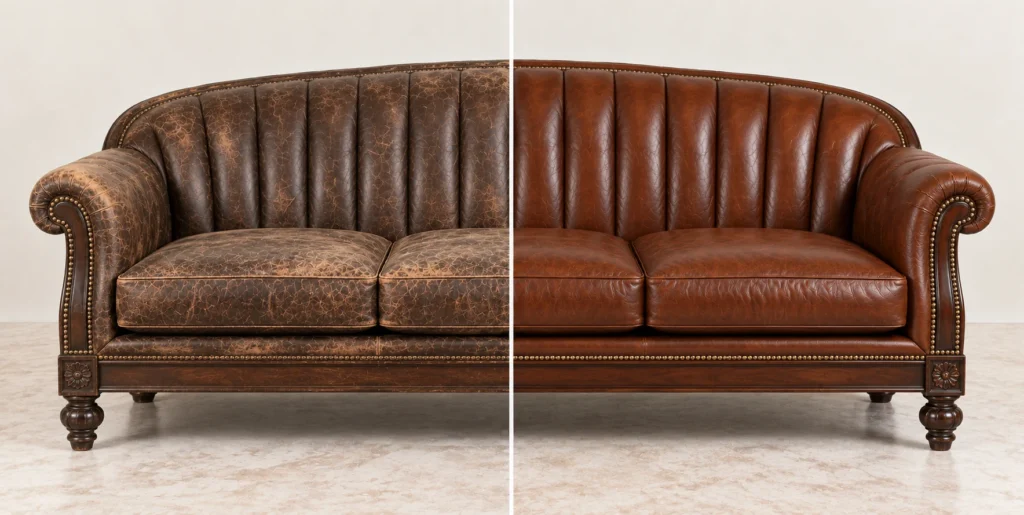
Dried-out finish breaks into a mesh of hairline cracks. We usually stabilize it instead of replacing it; our crack repair page explains more.
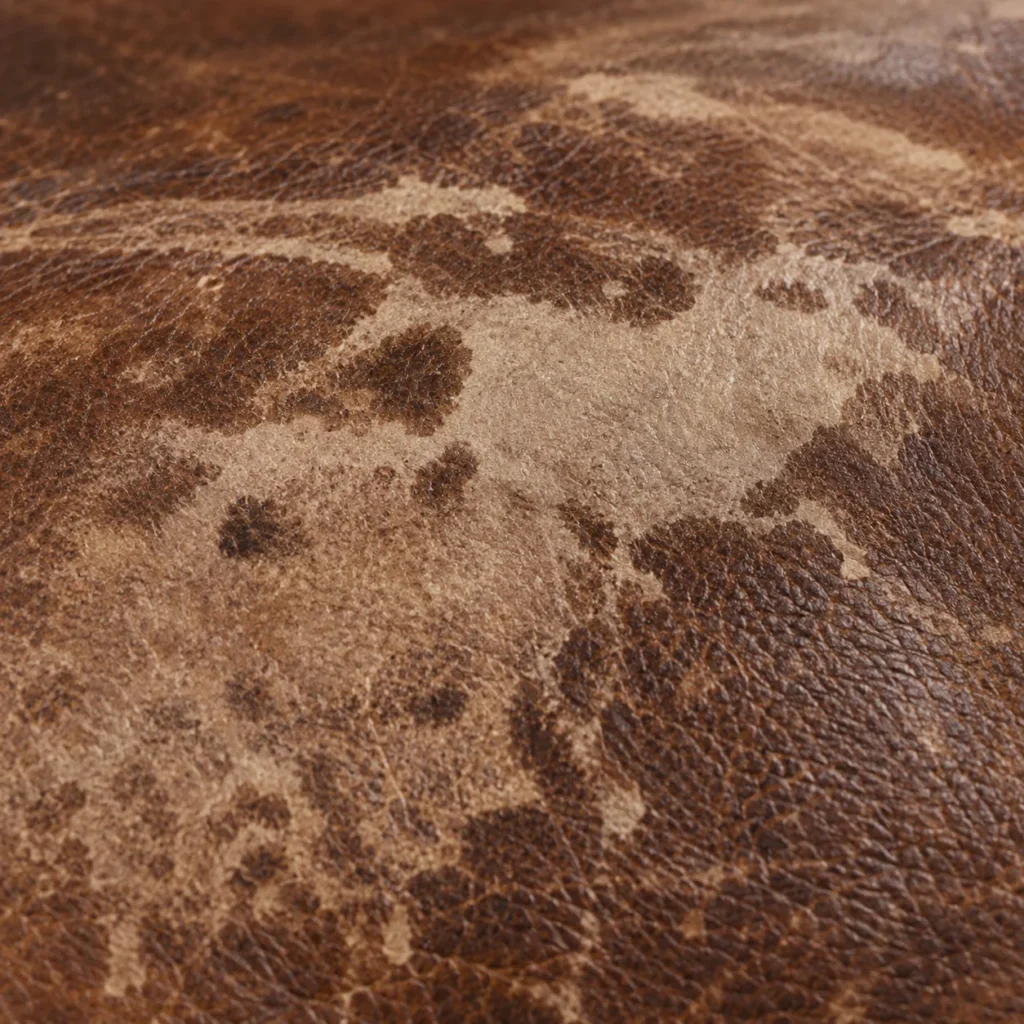
Worn-through finish
Arms and seats worn to the bare hide. We rebuild color on the worn patch alone and feather it into the patina.
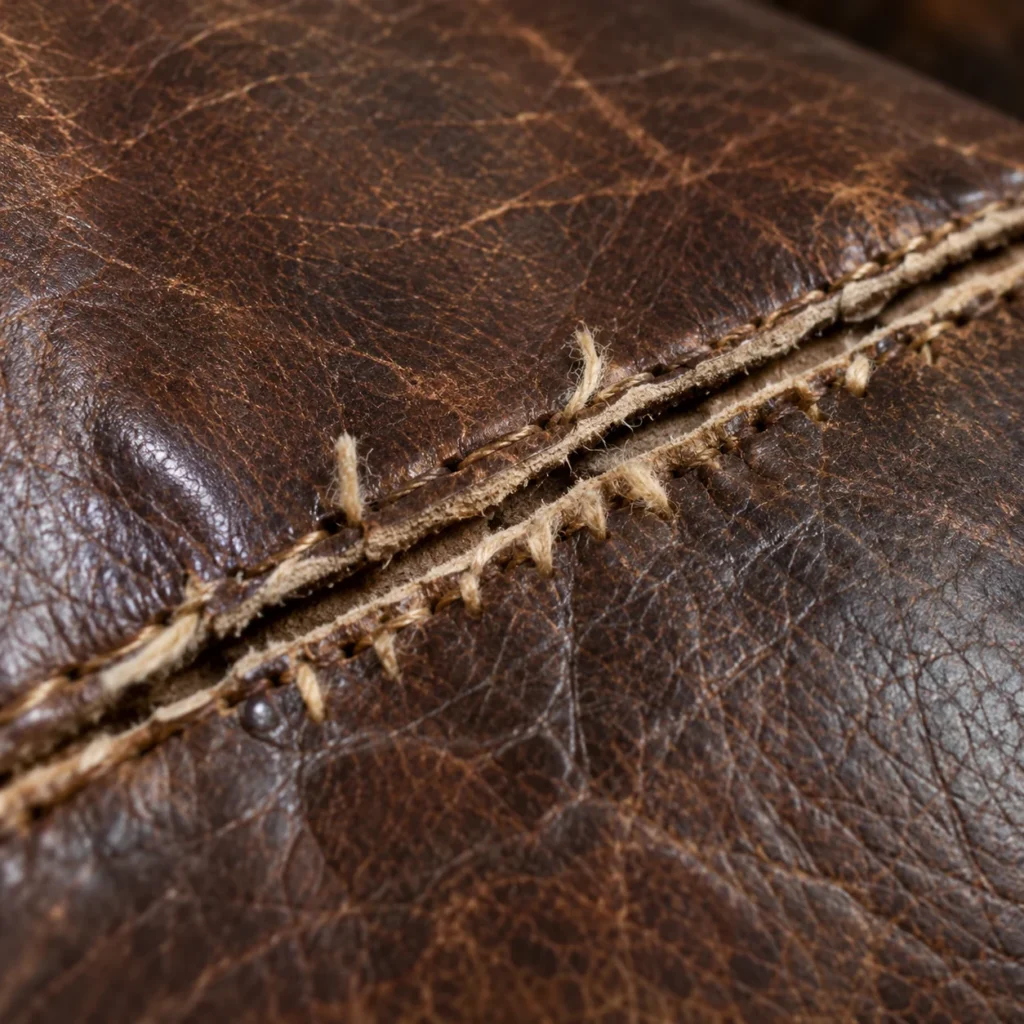
Broken seams
The old linen thread has rotted away. We sew the seam again by hand through the original holes.
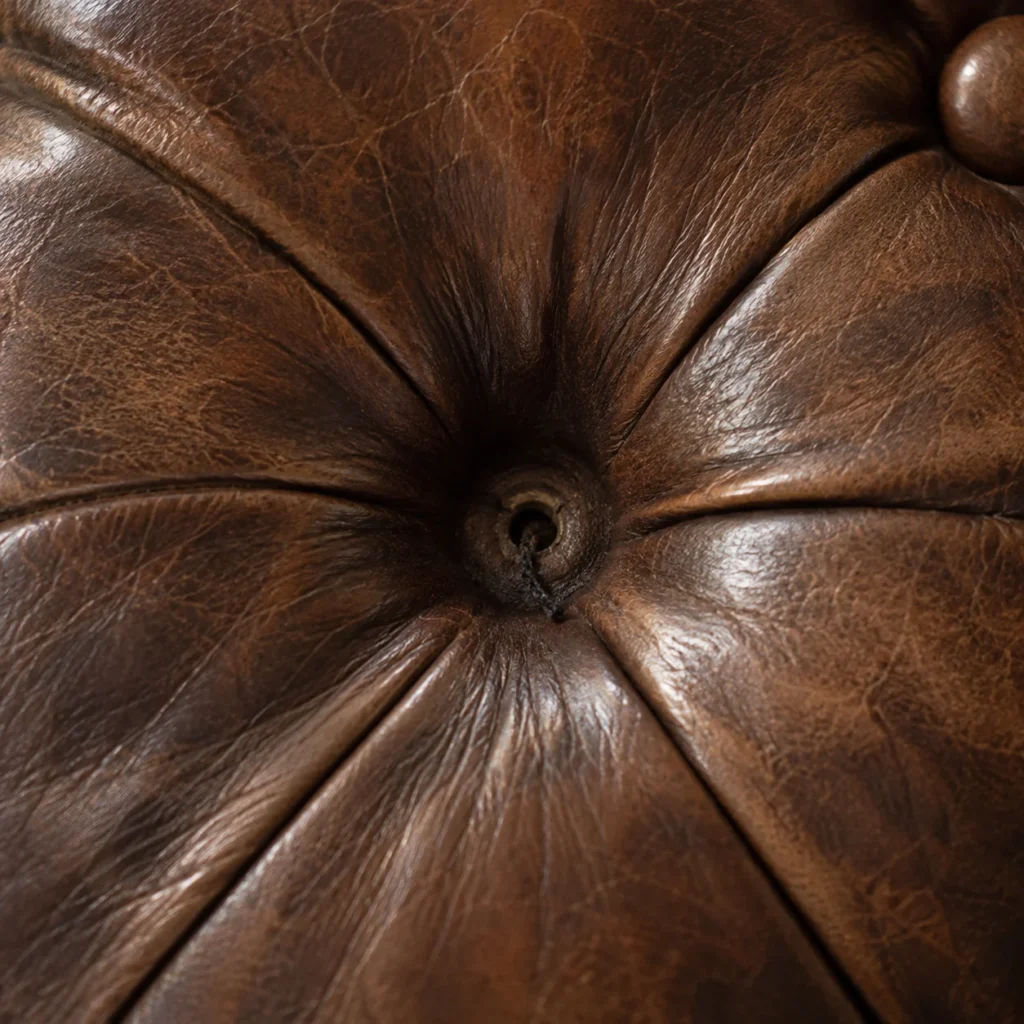
Lost buttons
A bare dimple marks where a button tore free. Replacements are covered in matching leather and tied in.
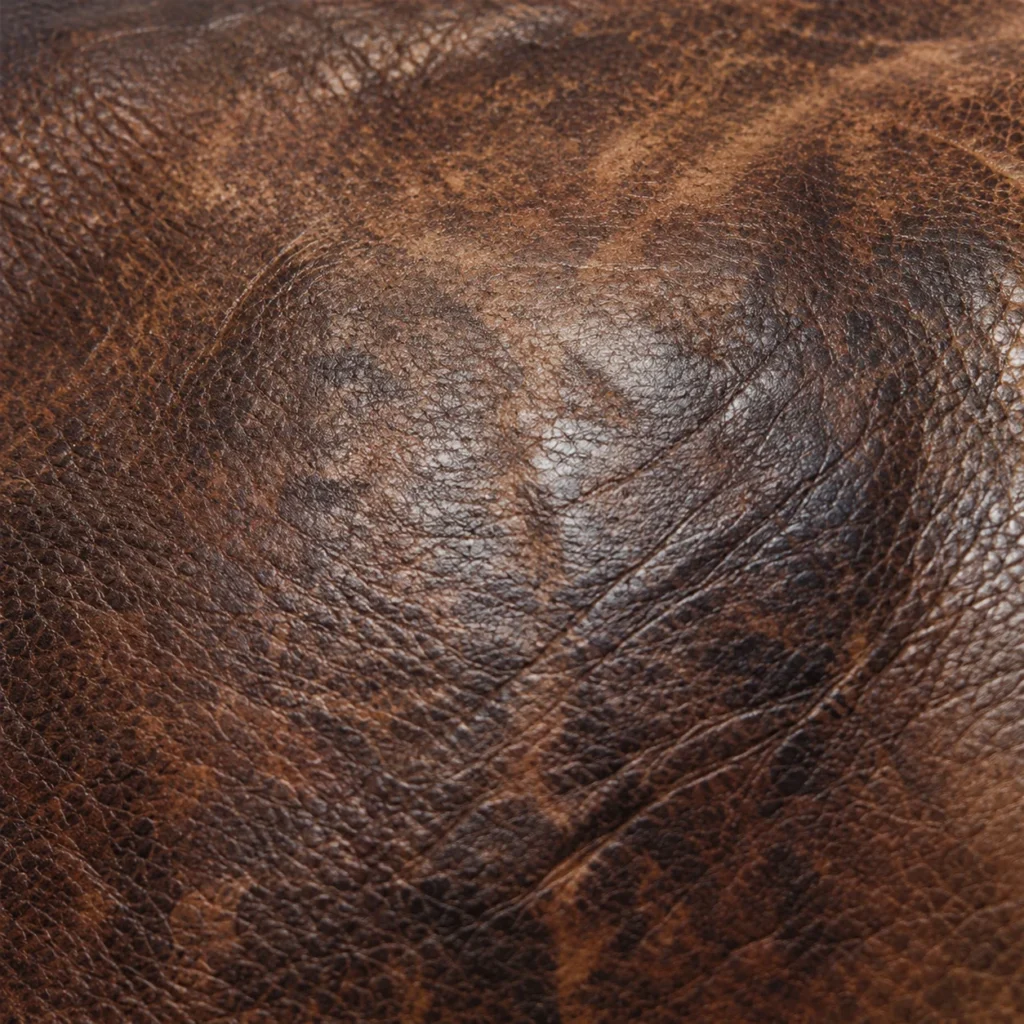
Sagging panels
Stuffing has migrated or the webbing has failed, leaving a dip. We rebuild the padding beneath the existing cover.
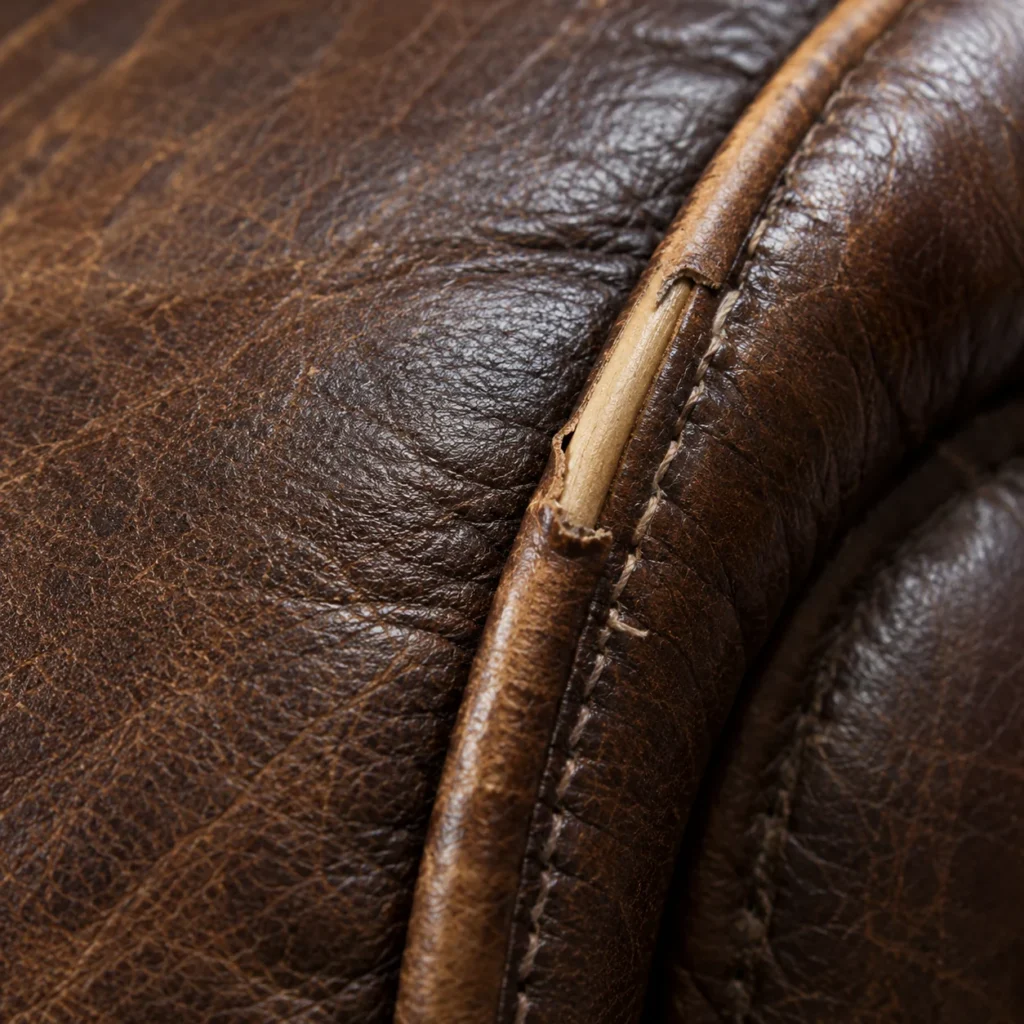
Burst welts
The piping has split and the cord shows through. We close it or make a new welt in matching leather.
Hand work, thin coats, no rushing
Aged leather punishes strong products and hurried hands. We apply everything sparingly and inspect each stage before moving on.
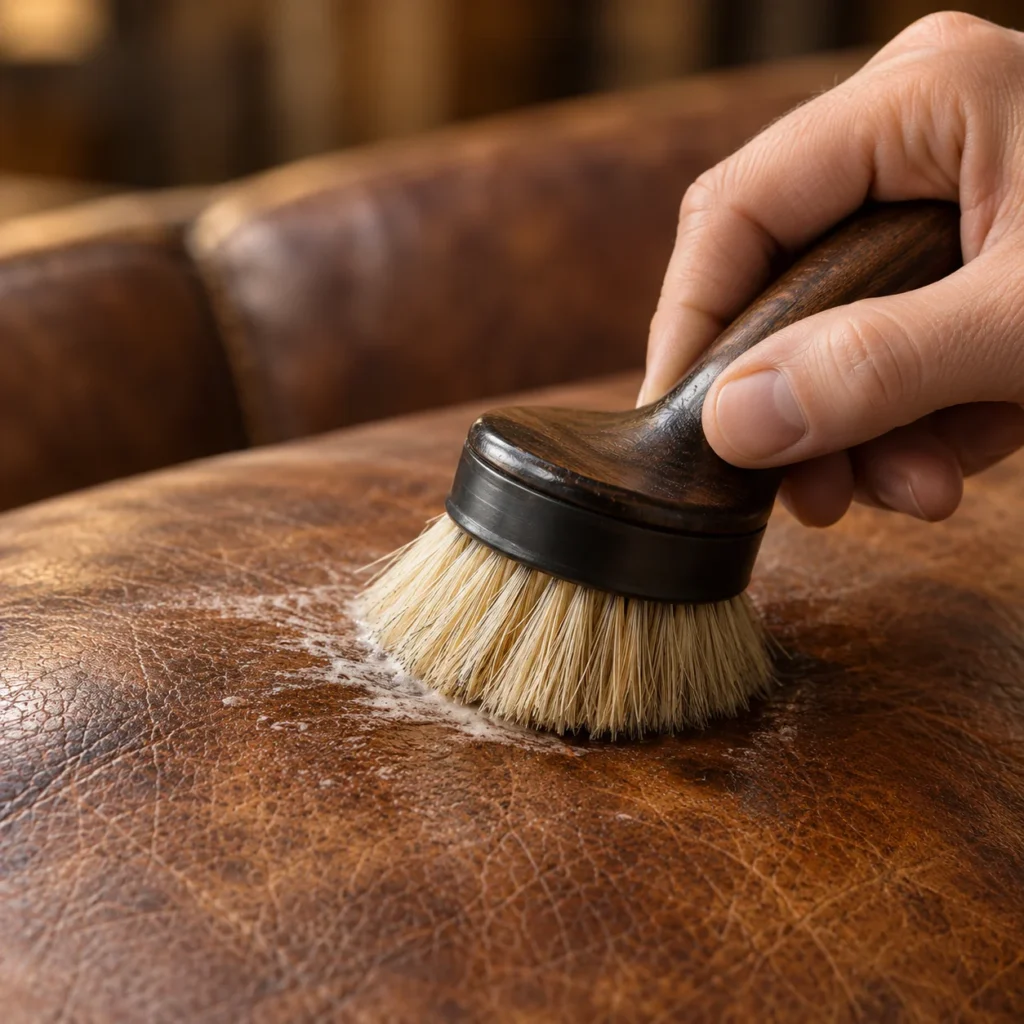
Clean gently
We brush in a mild cleaner that draws dirt out of the grain and leaves the color alone.
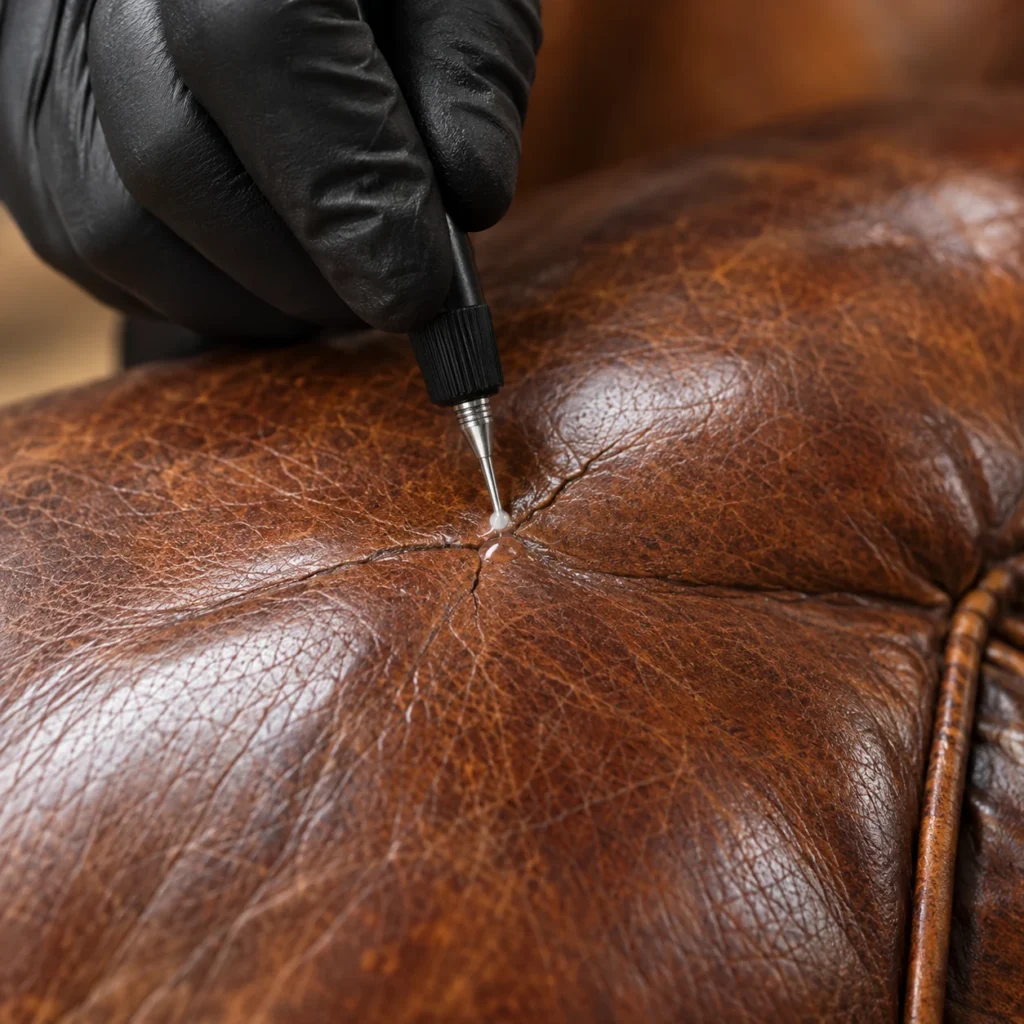
Consolidate
Each split is glued from the underside, then filled level in tiny amounts with a fine applicator.
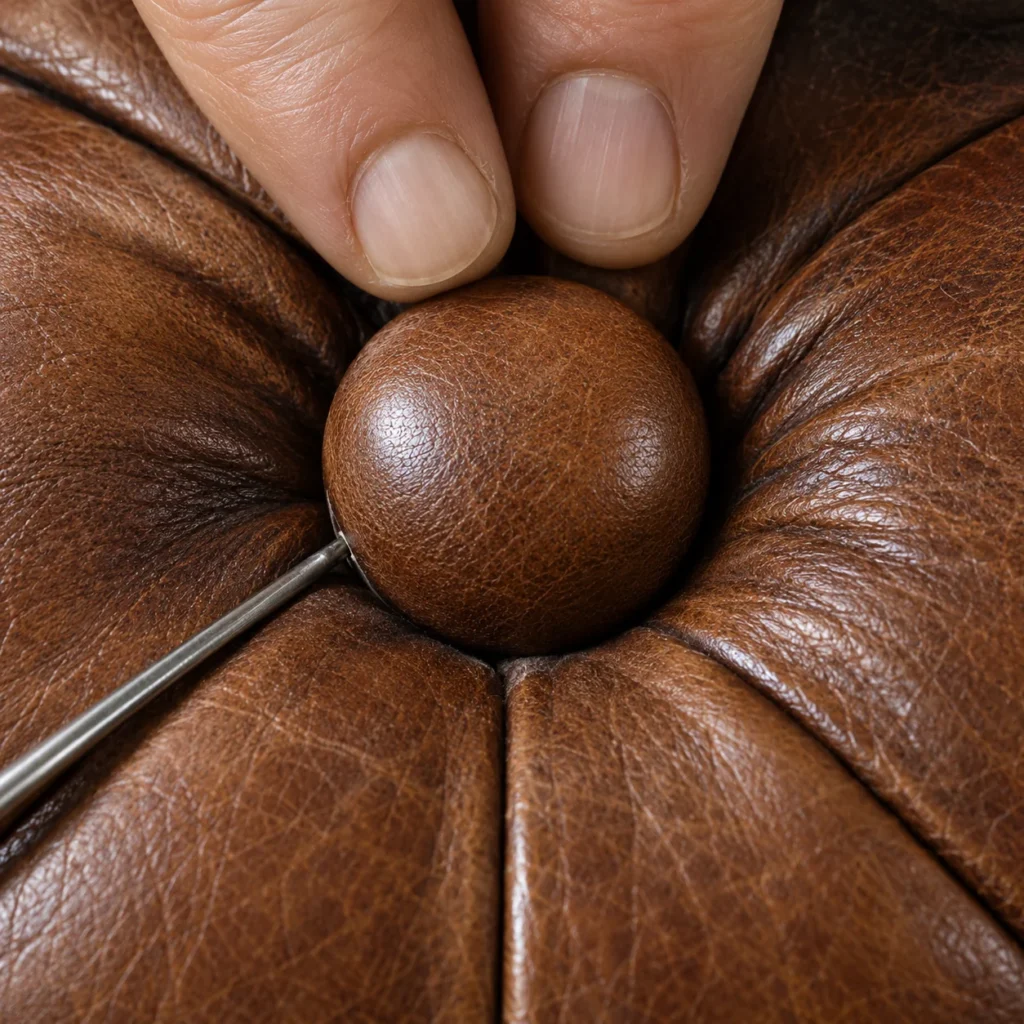
Rebuild details
We retie buttons, restitch seams and close welts, reusing the original holes when they survive.
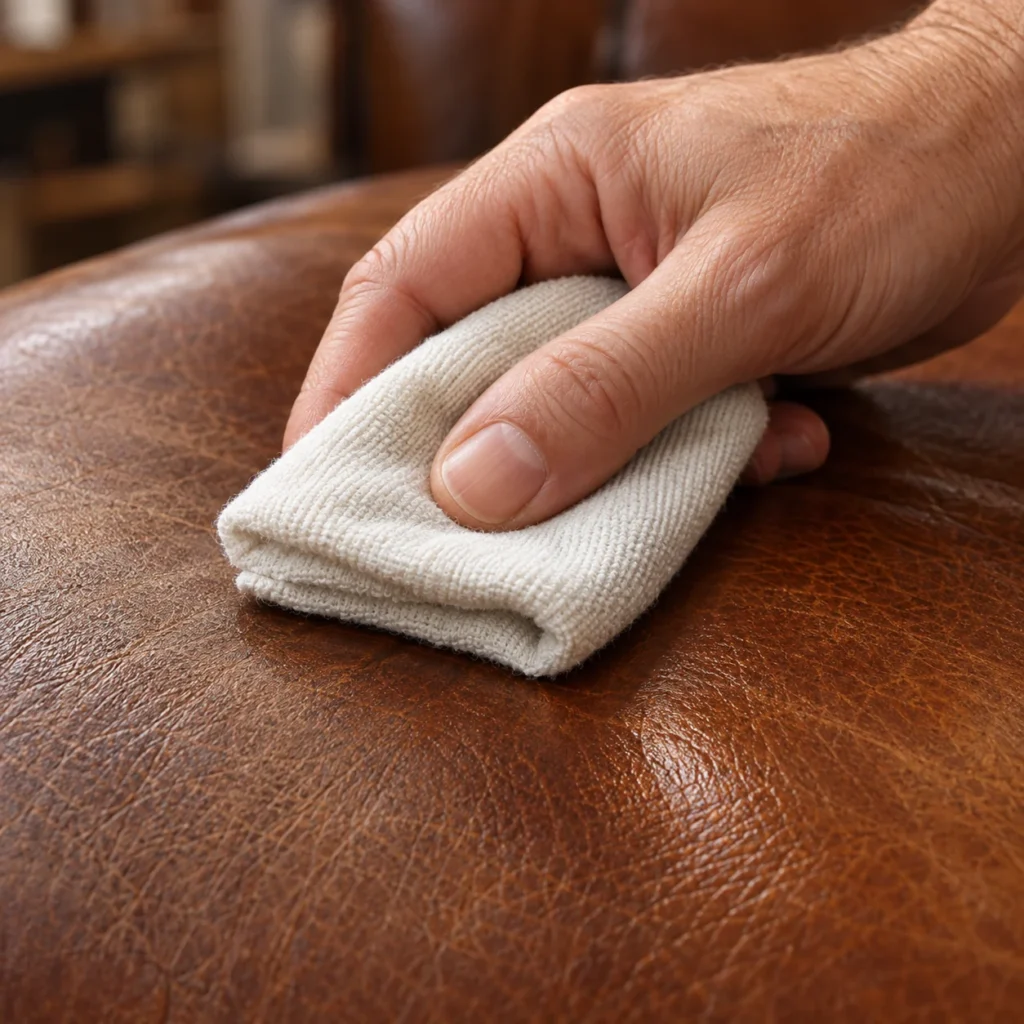
Feed and finish
After conditioning, we hand-buff the hide to the quiet glow aged leather ought to have.
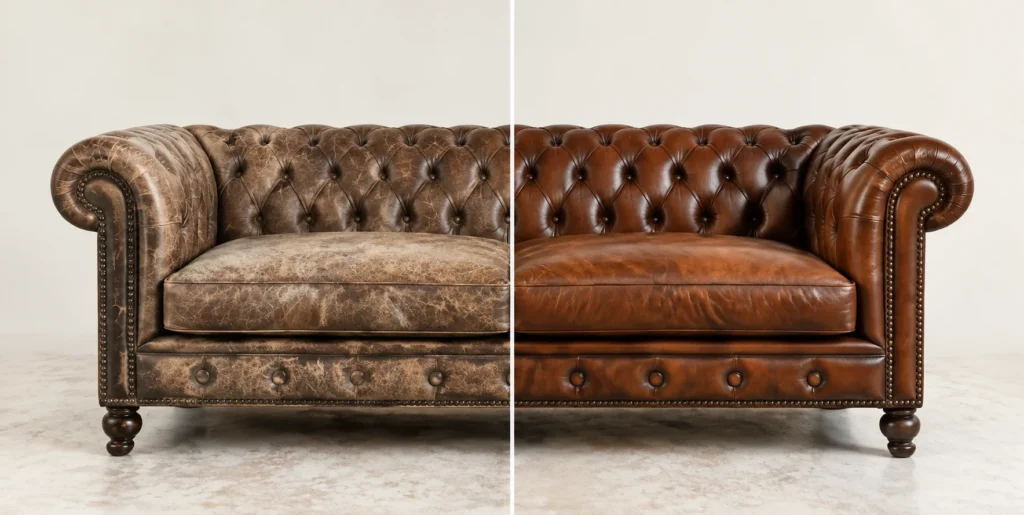
Restored antiques, side by side
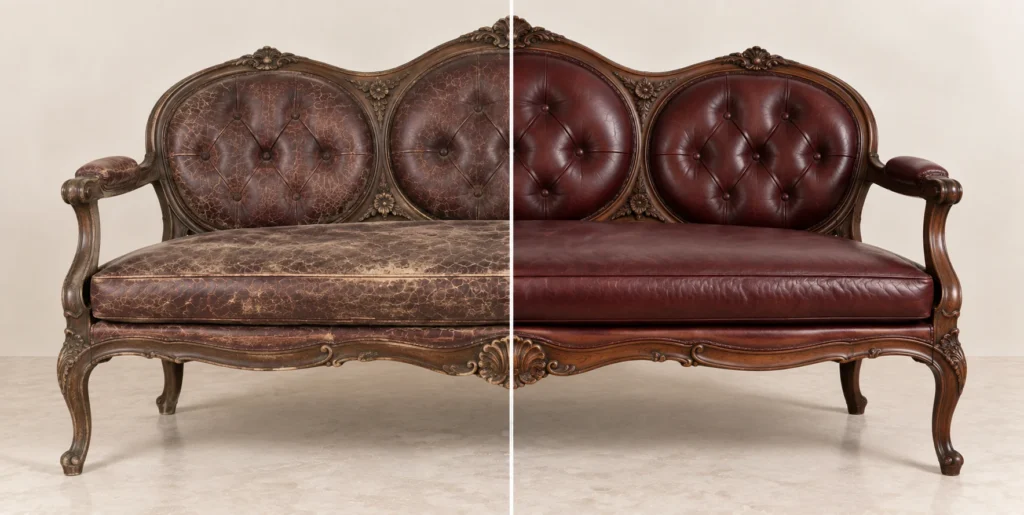
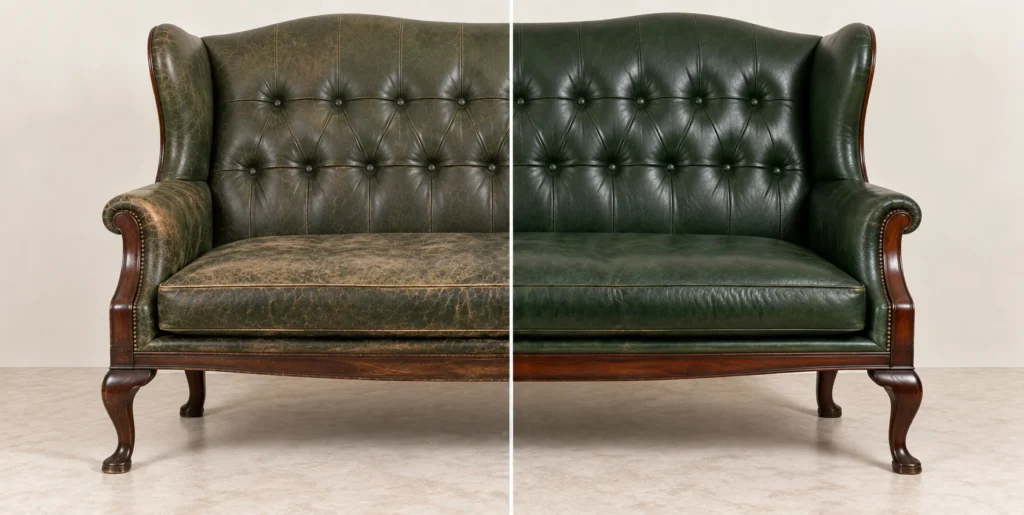
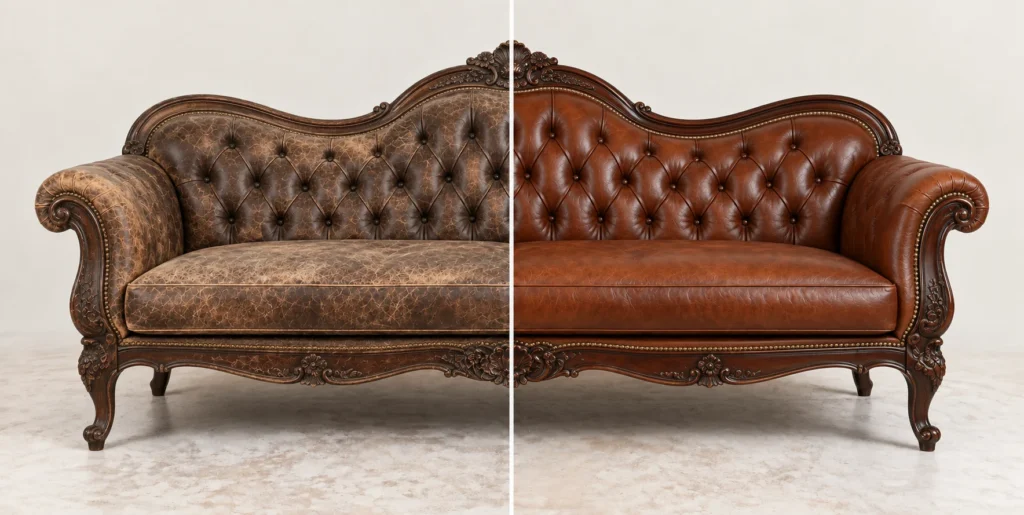
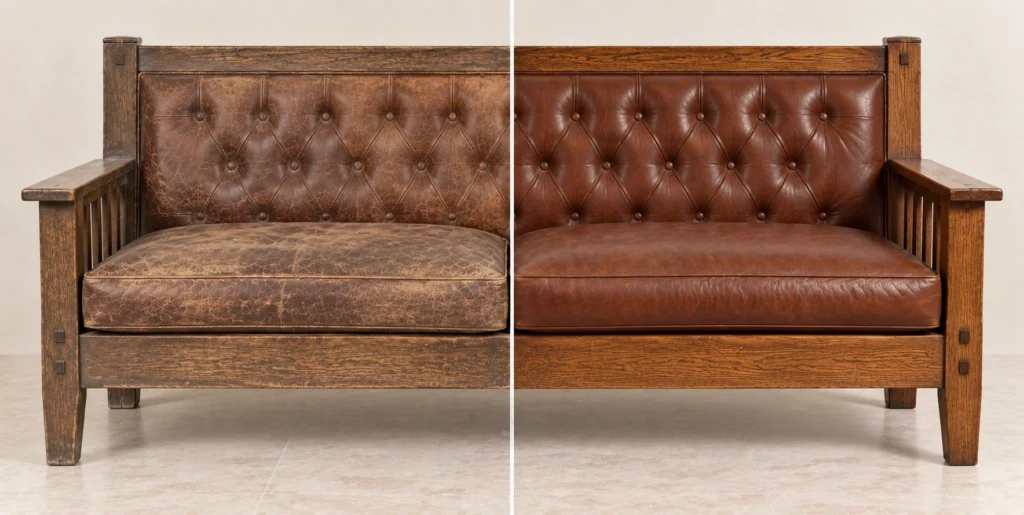
Questions to settle before booking
Having these answers ready gives you a more useful estimate and keeps the piece safe. If your furniture is of museum quality, the American Institute for Conservation maintains a directory of conservators.
- Could it be valuable?When a piece might carry real historic or market value, have an appraiser look at it before anyone works on it. An original hide is often worth more than a flawless surface.
- Do you want it to look new?Most people want a piece that looks well looked after rather than new. Tell us which you prefer, because it decides how much color we apply.
- Is the frame sound?A furniture restorer has to deal with broken springs or loose joints first. If your photos show either, we will say so.
- Is the leather original?A past recover or a painted finish calls for a different method. A close-up of a worn area normally tells us.
Antique Leather Questions
Common questions before booking antique leather furniture restoration CT wide.
Will restoration lower the value of my antique?
Restrained work that preserves the original hide generally protects value better than a recover. For a piece that may matter, consult an appraiser or a furniture conservator before booking, and we will follow what they advise.
Do you strip and repaint old leather?
No. The antique leather furniture restoration CT owners hire us for preserves the patina. We add color only where the finish has worn through and blend it into the aged surface.
Can very cracked leather be saved?
Frequently, provided the hide stays intact when you flex it. We clean, feed and consolidate leather that is dry or crazed. Where it has crumbled to powder, we replace those panels with a leather picked to sit comfortably beside the rest.
Do you repair the frame or springs?
We handle the leather and the padding beneath it. Broken springs or loose joints belong with a furniture restorer, and we will flag them if your photos show them.
How do I get a price?
Send a photo of the full piece plus close-ups of the worst damage by text to (347) 310-7483 or email to office@leatherrestorepro.com, or fill in the free estimate form. We quote before anything is booked.
Show us the piece
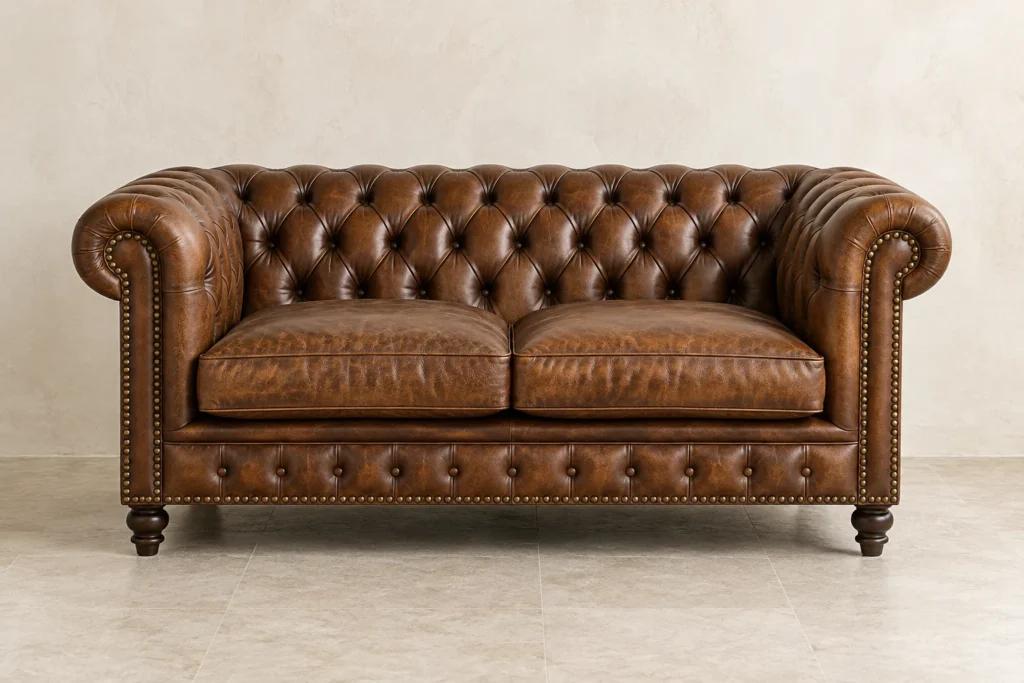
A full shot and a handful of close-ups of the worst areas let us price the antique leather furniture restoration CT owners request. Our reply lists what we would keep, what we would repair and what it costs.
Or call (347) 310-7483 · office@leatherrestorepro.com