

Leather Repair Help Center
The questions Connecticut owners send us before they book leather repair, gathered on one page: which damage can be fixed, how pricing works, which photos help us quote, and how the job runs from start to finish.
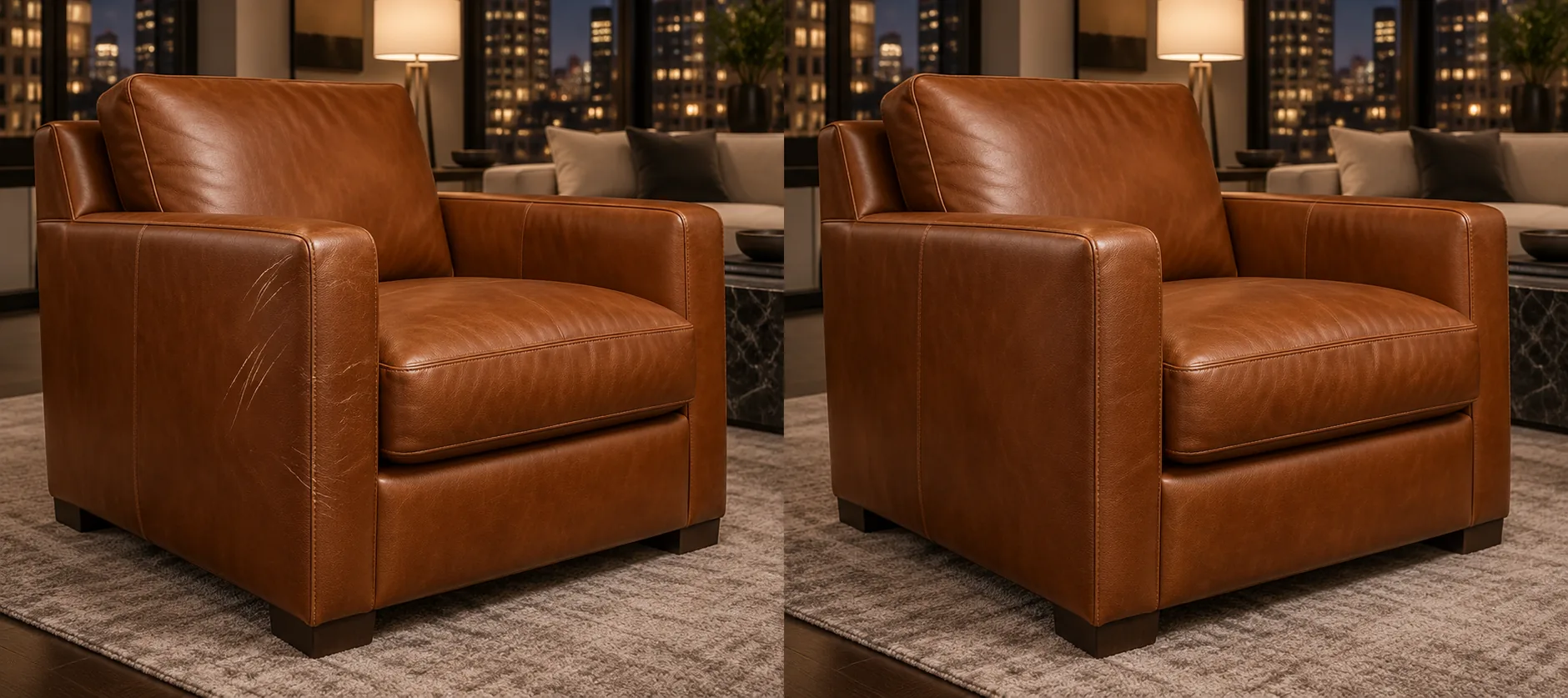
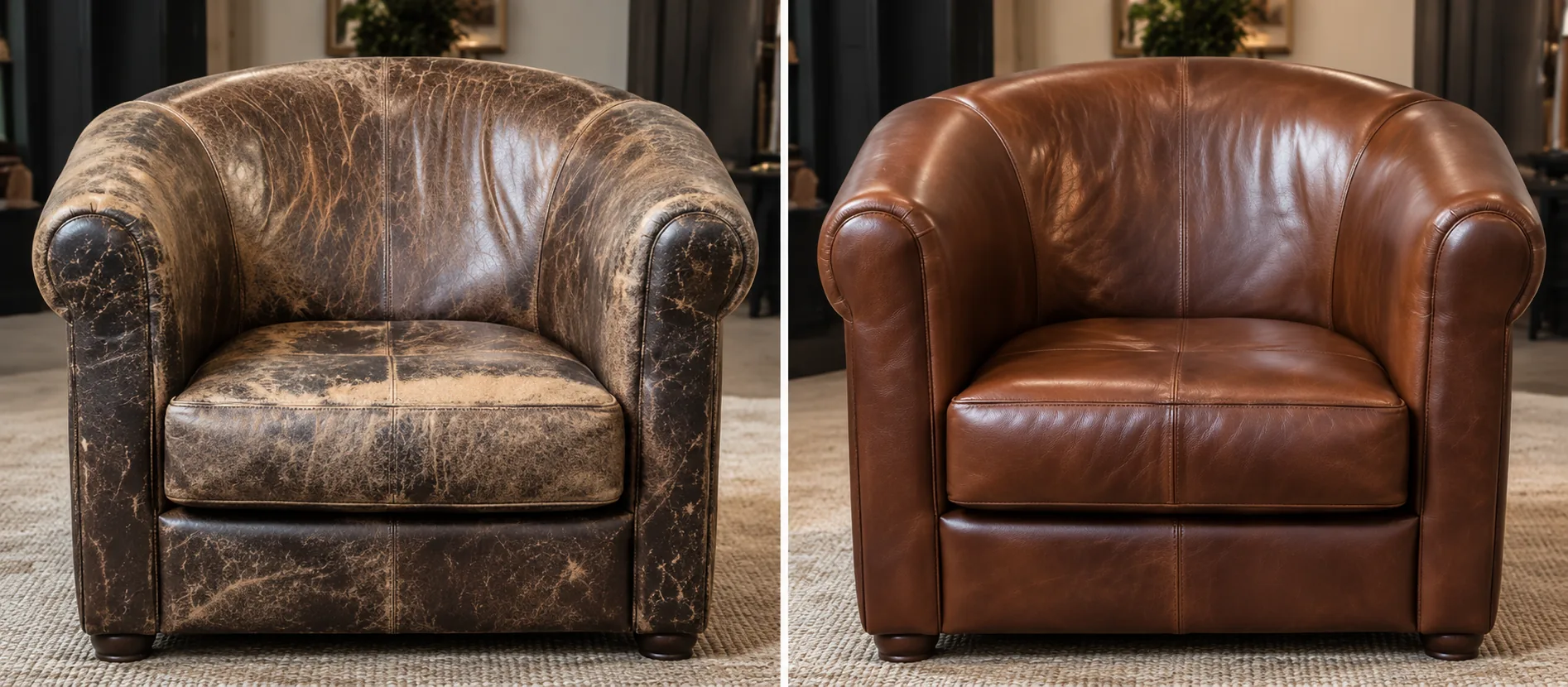
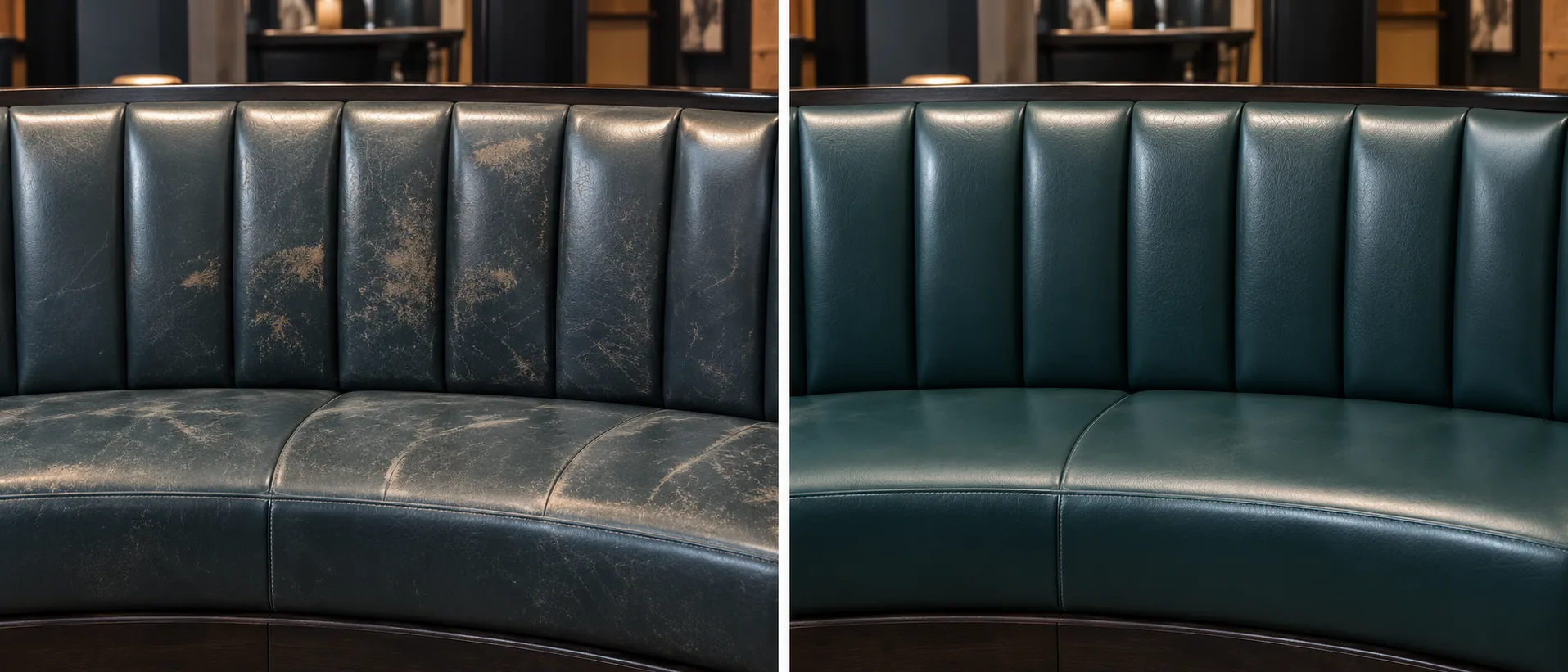
Pick the mark that looks like yours
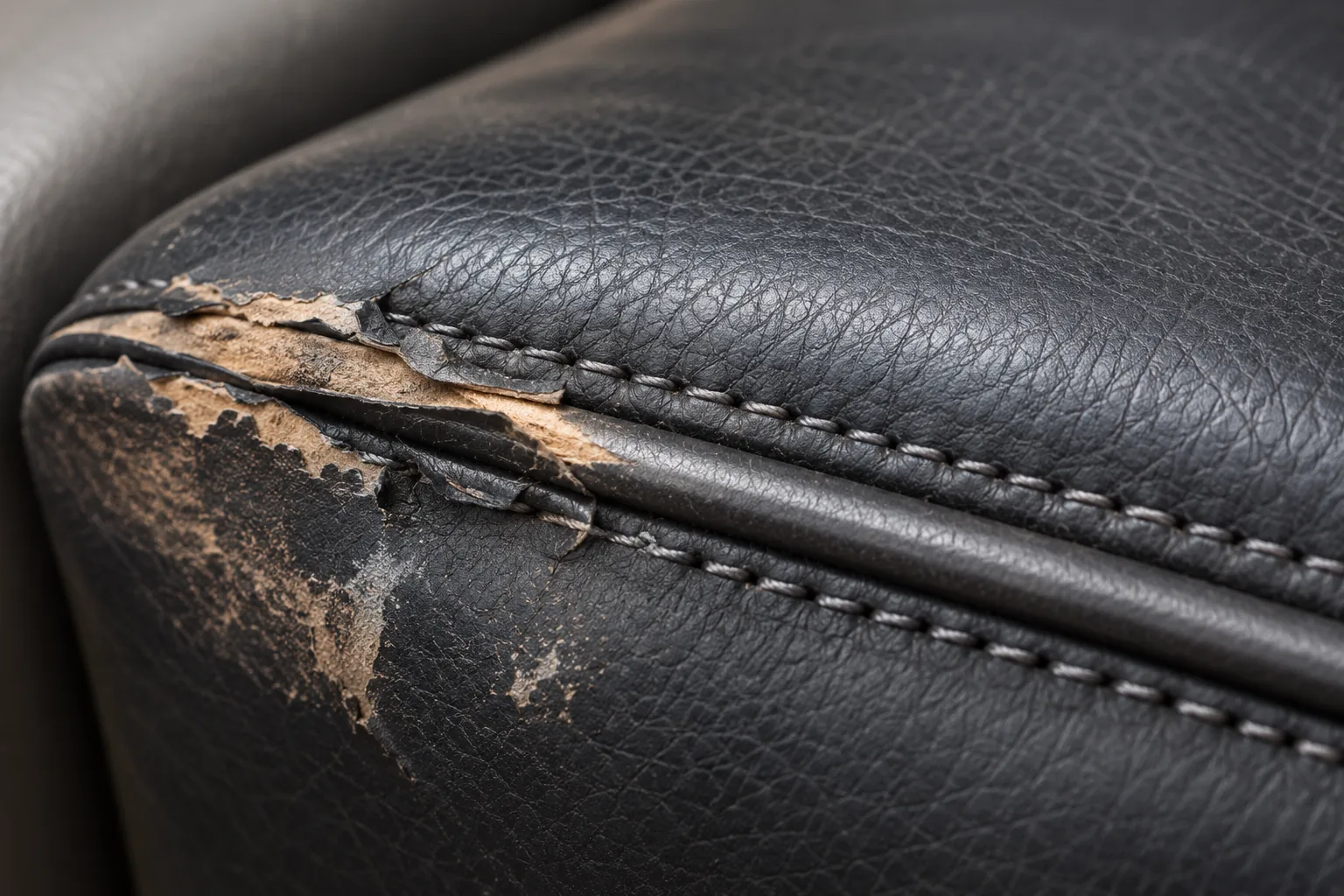
Most visitors to this leather repair help center are looking at one of three kinds of damage. Match the picture to your piece and jump to the right page.
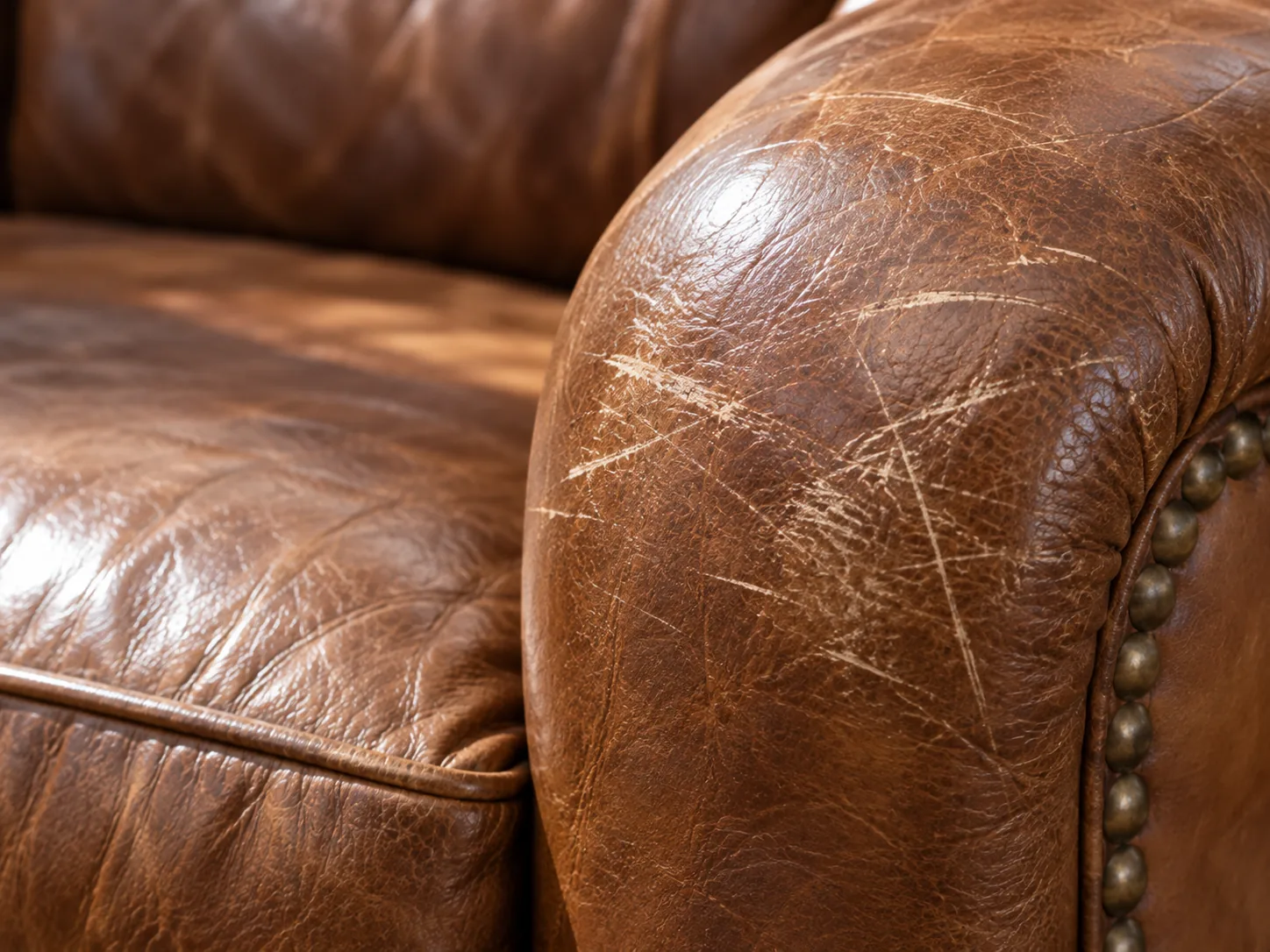

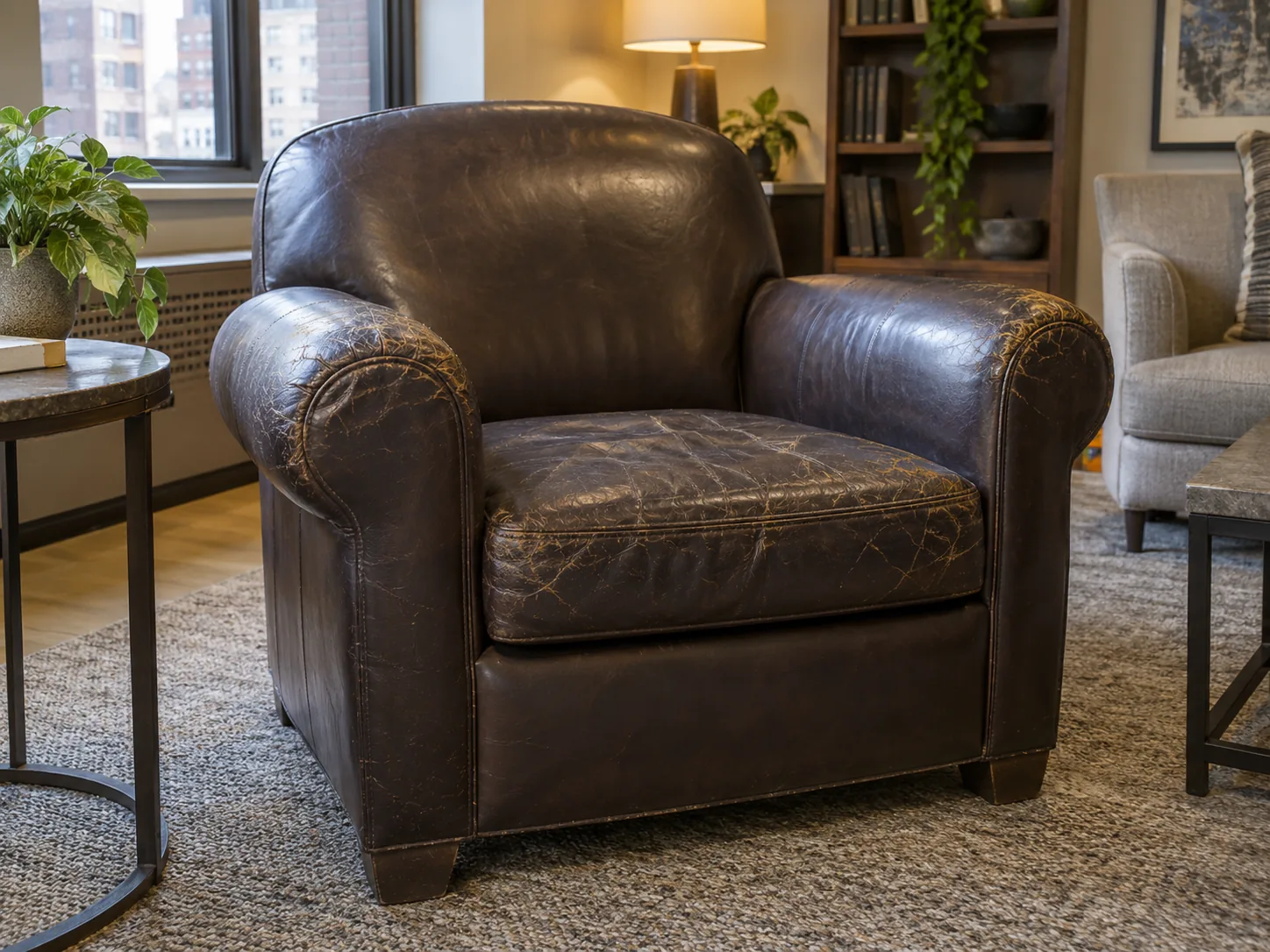
Something else? Our services page lists every type of job we handle.
Photos that get you an accurate quote
We price almost all leather repair work in Connecticut from pictures you send. Looking costs nothing, and most of the time we can give you a firm price and a start date without seeing the piece first.
Four shots usually covers it. Use daylight, turn the flash off, and hold the phone straight at the surface instead of tilting it.
Let us know when the damage happened and what did it. Those details shape our approach more than how big the mark is.
The full piece
Step back until the whole chair or sofa fits in the frame. That shot shows us its color and how glossy or matte it is.
A close-up of the damage
Get near enough that the border of the mark is in focus. That border shows whether only the finish is hurt or the hide itself.
A size reference
Put a coin, a key or your hand beside it. Cameras make everything look the same size.
The tag, if you can find it
Check under the cushions or behind the skirt. A tag often tells us the leather type so we do not have to guess.
Repair, restore, or reupholster
People use these terms interchangeably, but they are separate jobs. On a leather sofa, the price gap between them is often around five times.
A single area, done in a day
Think tears, holes, burns and open seams. Leather repair at this level treats the damaged spot and feathers the finish into what surrounds it, and the rest stays untouched. Most crack repair falls into this group.
Every surface at once
We clean, recolor and seal a full panel or the full piece so it looks like one even color again. Fading, heavy wear and tired old touch-ups call for this.
A brand-new cover
We strip the old cover and fit new leather or fabric. It makes sense when the frame is solid but the cover is worn out, or when you want a new material.
Can't tell which one applies? Just text or email us the pictures. If a simple repair will do, we would rather tell you so; it saves you money and saves us time.
Can my furniture be repaired?
In most cases, yes. Damage that sits in the finish, such as scratches, scuffs, faded color, shallow cracks and most stains, can be brought back.
The exception is leather whose fibers have broken down. When the hide rips under light thumb pressure, or a bonded cover is coming off in flakes, new color has nothing to grip. Those panels need replacing or the piece needs a new cover, and we will tell you that plainly instead of selling a fix that gives out within a year.
Timing is the factor that really shifts things. Damage handled in the first week and the same damage left for six months are two separate jobs with two separate prices.
The material decides the method
One scratch can mean four very different leather repair jobs, depending on what kind of hide it is in. Figuring this out before you contact us is the most helpful step you can take.
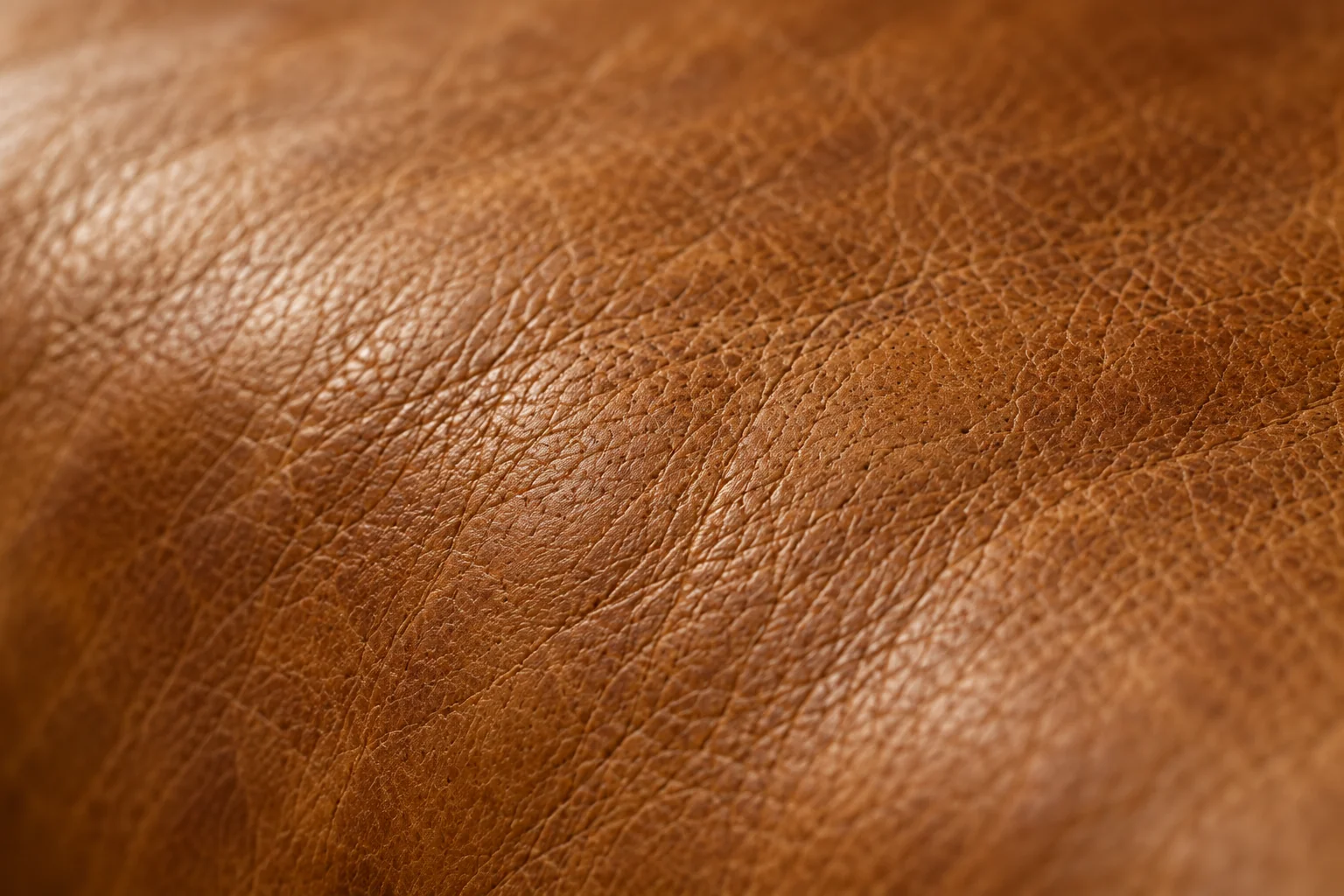
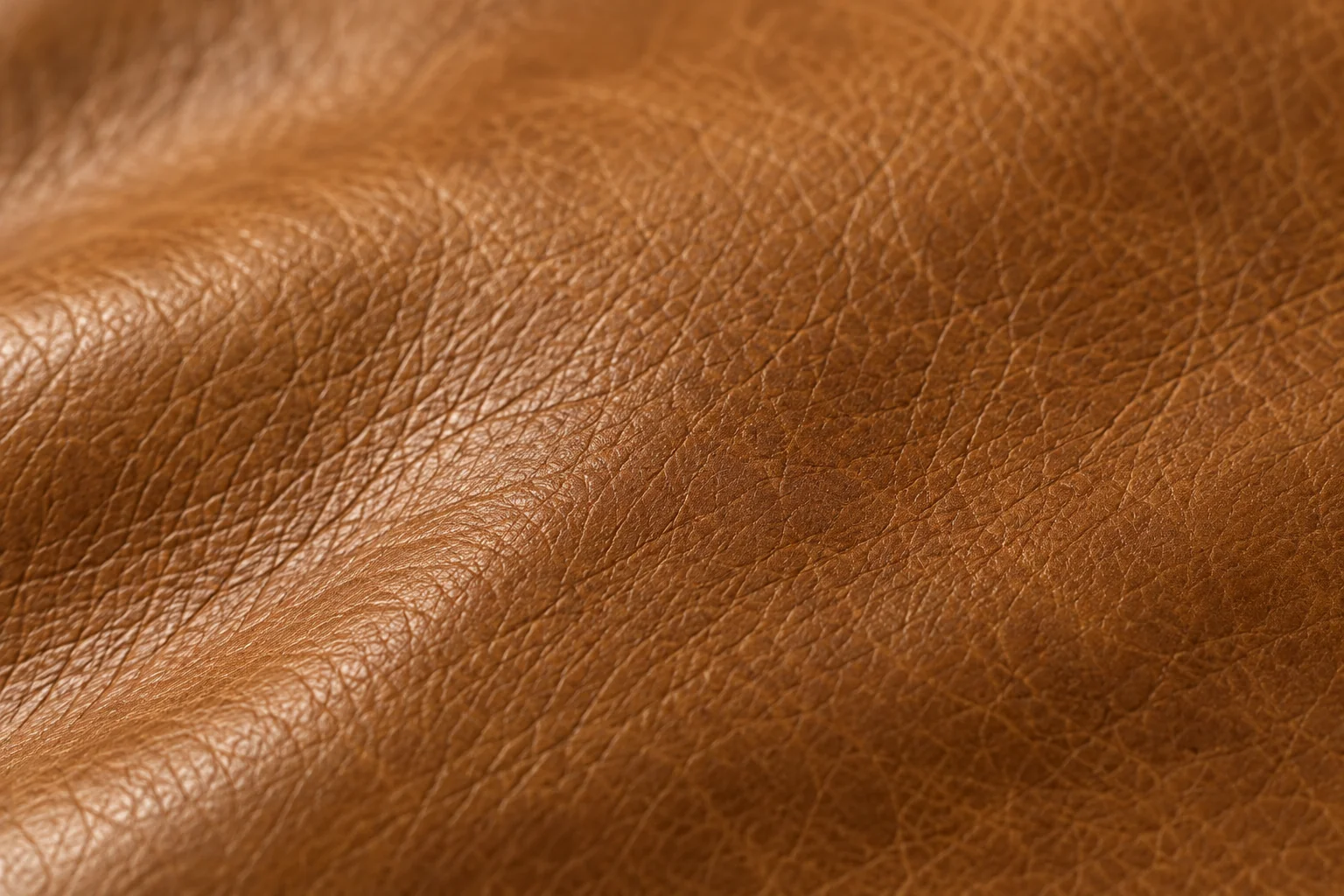
Color goes all the way through and nothing sits on the surface. It is soft and warm, it records every scratch, and it soaks up spills fast. Lovely to own and the hardest to fix, because we build color up in thin coats instead of covering the area.
Dyed hide with a thin clear layer on top. You find it on most well-made sofas sold today. It responds well to repair and keeps its color.
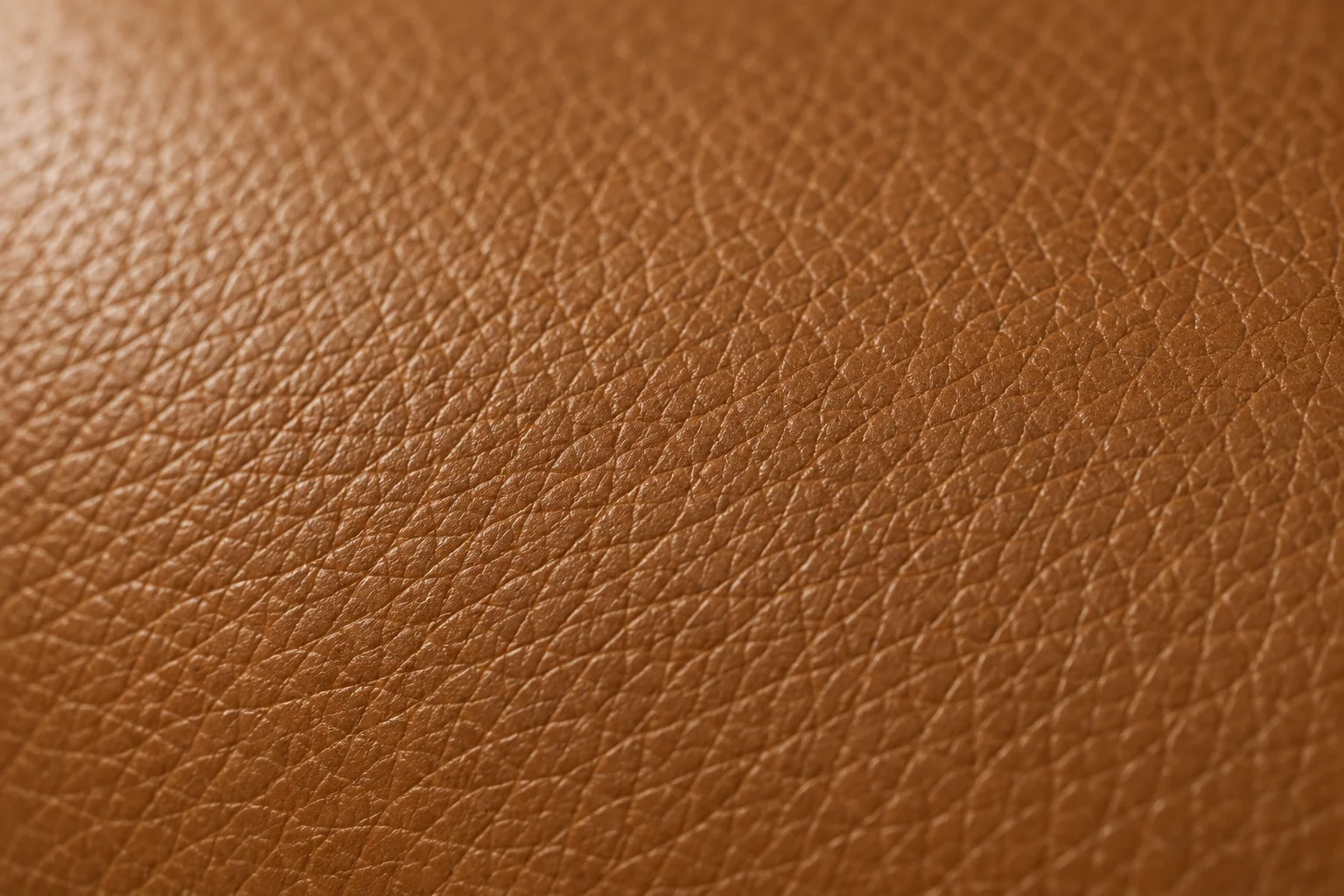
Covered with an opaque color coat. This is the leather in most family rooms, it wears the longest, and it is the simplest to repair invisibly.
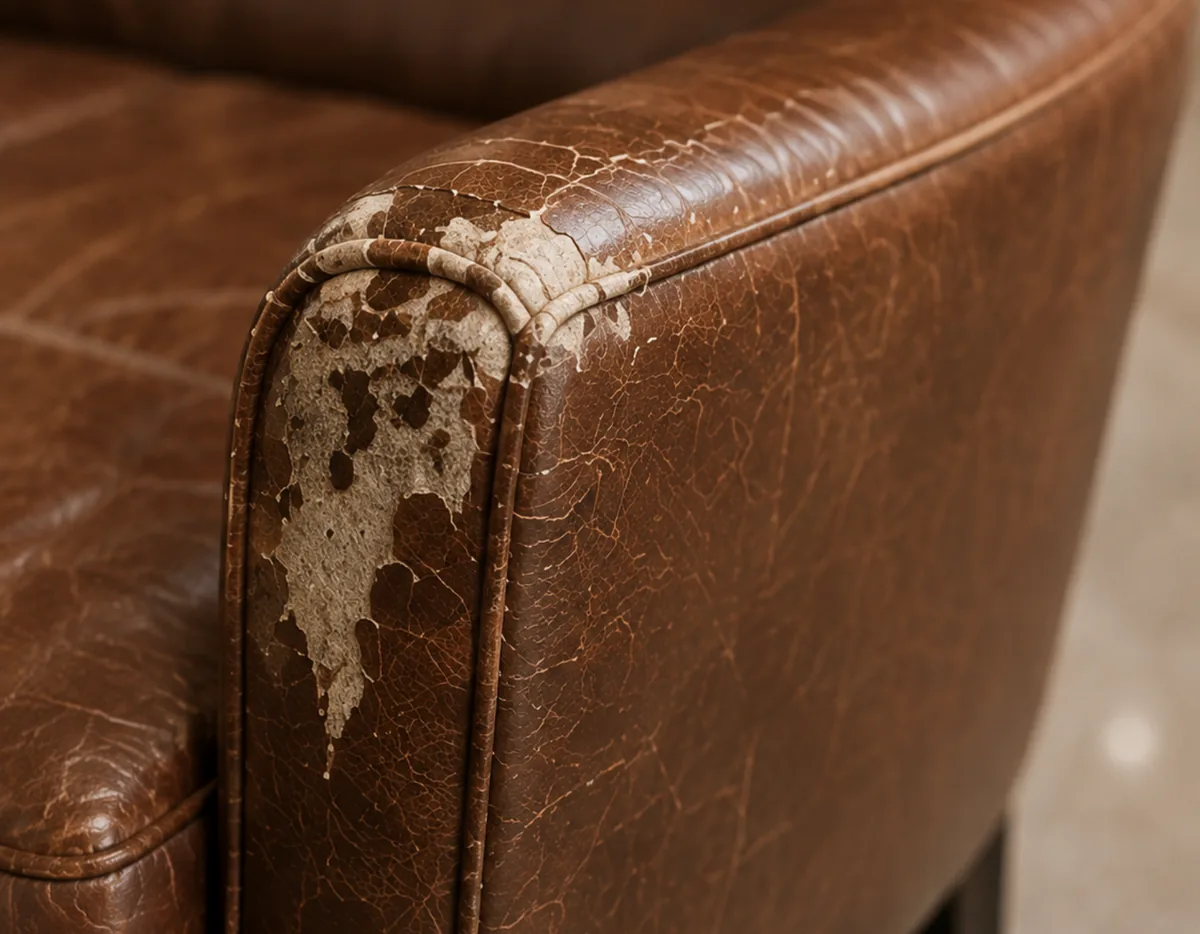
Shredded leather or vinyl glued onto a cloth base. Instead of cracking, it separates, and the top layer comes away in flakes. We can tidy it up and slow the peeling, but it will never look new again, and we say so before any work starts.
Try this: put one drop of water somewhere hidden. If it sinks in and the spot darkens in a few seconds, you have aniline. If it stays on top as a bead, the hide is pigmented.
The four stages of the work
Every leather repair job we take in Connecticut follows the same order. For a typical piece the work itself takes two to four hours, and the furniture can be used that same evening.
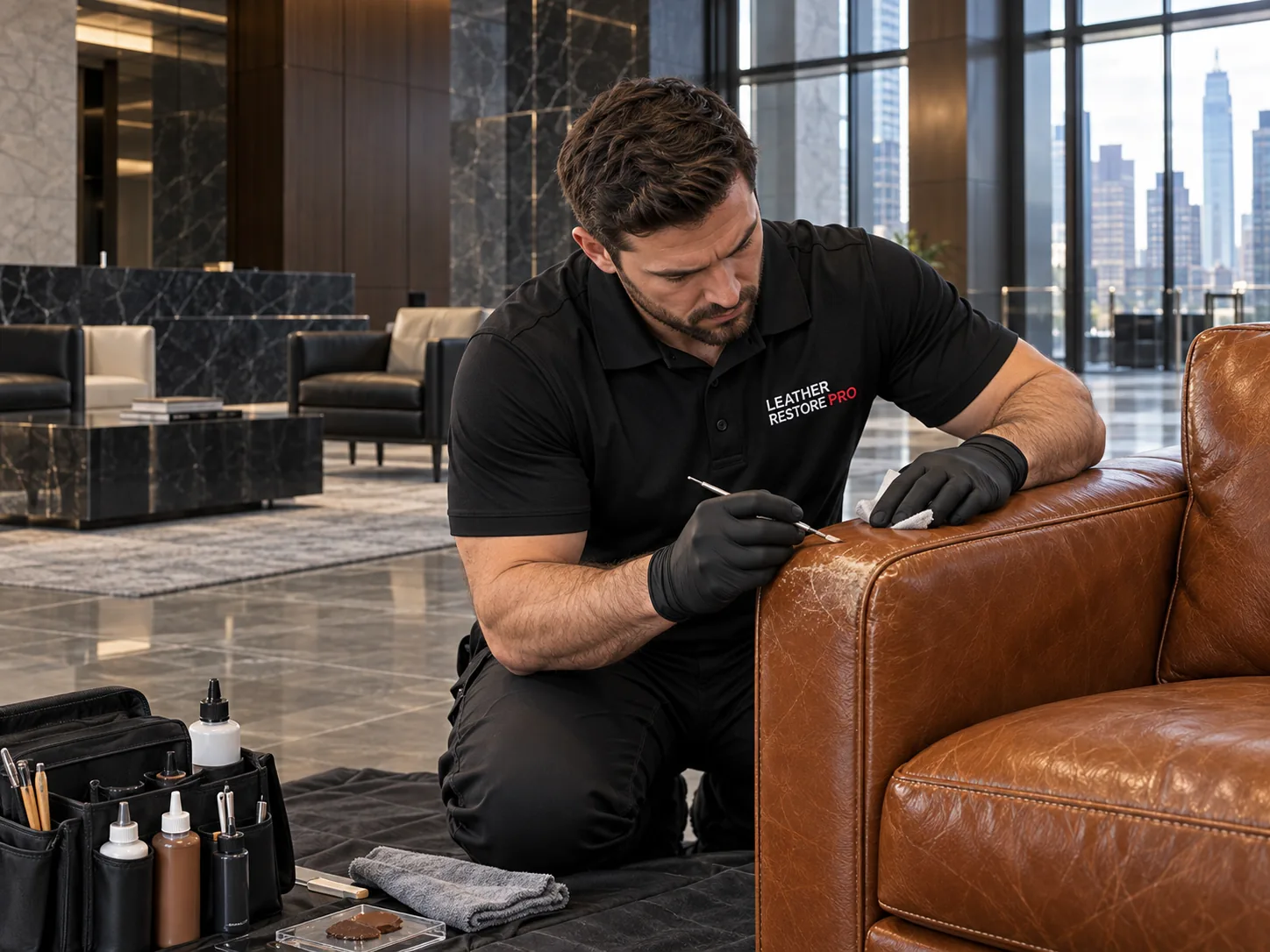
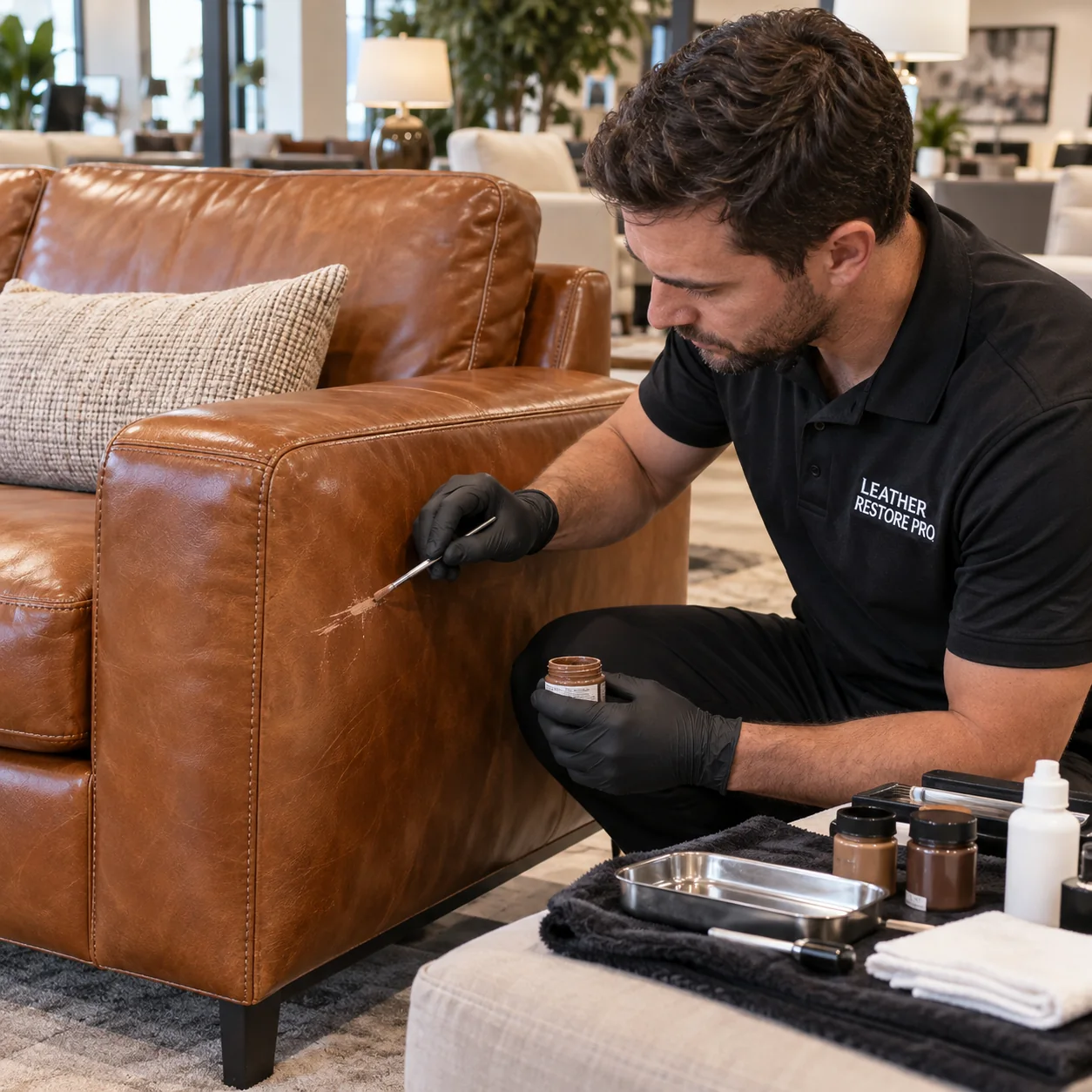
We always try the products on a spot nobody sees first, such as the back flap of a cushion or the inside of the skirt. That trial shows us whether the existing finish will react before we commit to it.
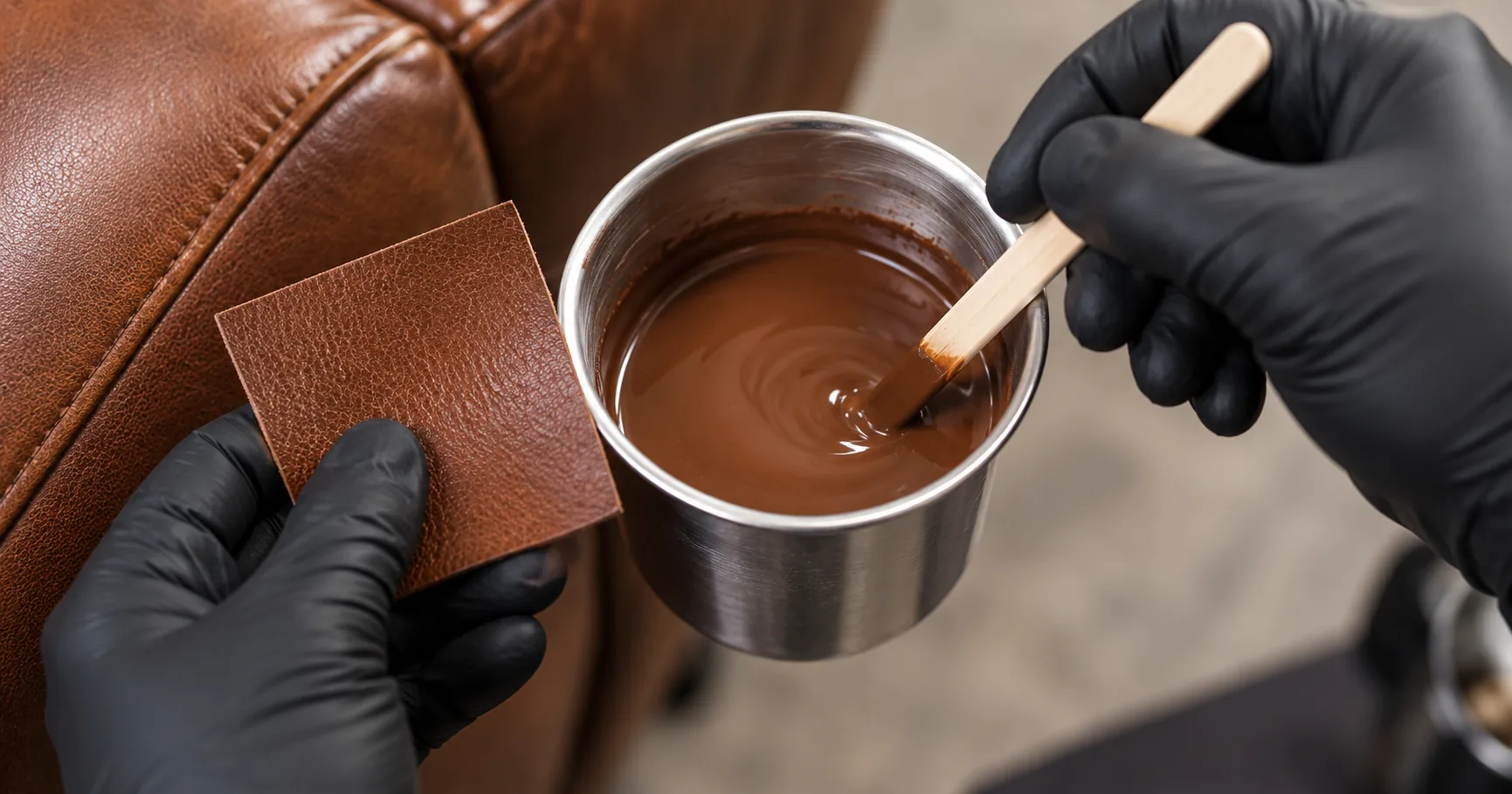
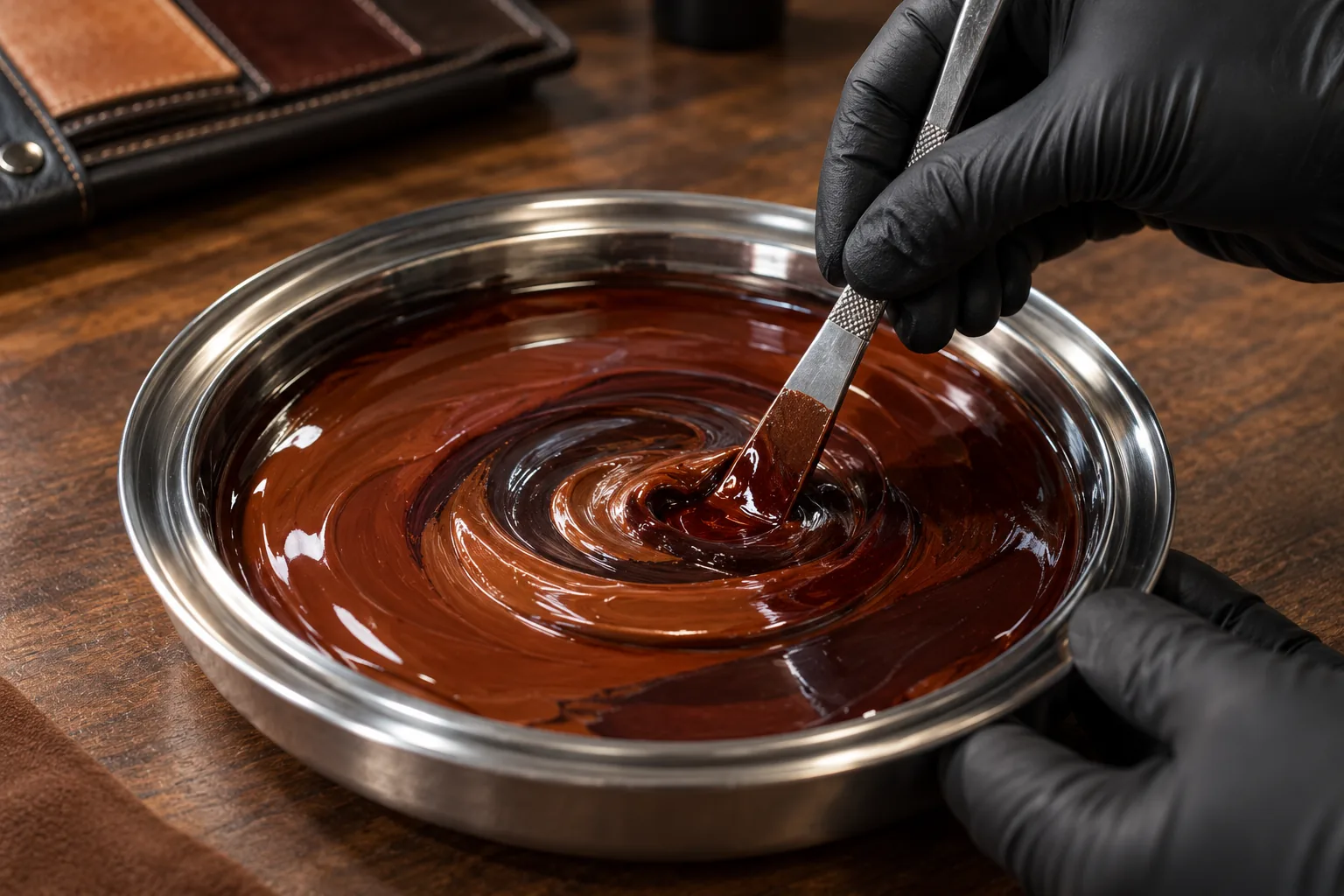
We match color against your actual furniture, not a swatch book. A shade that looks right under one kind of light can look wrong under another, so we start from base pigments and adjust until it agrees with the piece.
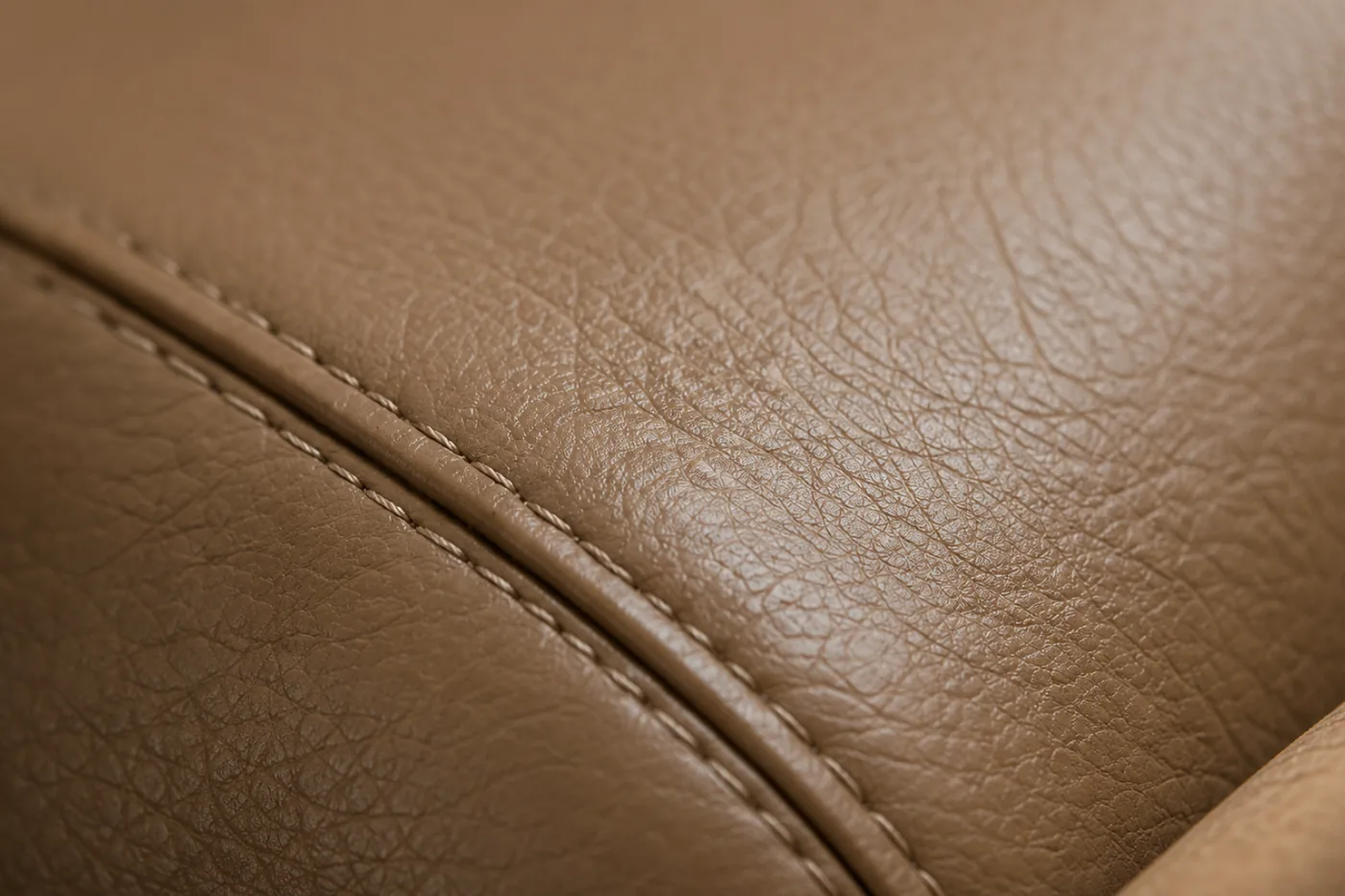
The final coat is a sealer, and it needs time to set. If you can, keep everyone off the piece until the next day. The cushions can go back on the same day; we only ask you to hold off on sitting.
Pricing and payment
Our price is for the leather repair job, not for time spent. What we quote from your photos is what you will pay, unless you decide to add work later.
The price of a leather repair depends on four things: the age of the damage, whether a cleaning product has worn down the finish, how many panels need blending for an even color across the piece, and how easy the piece is to reach.
Booking costs nothing up front. You pay when the job is done, after you have checked the result in the light of your own room and are satisfied.
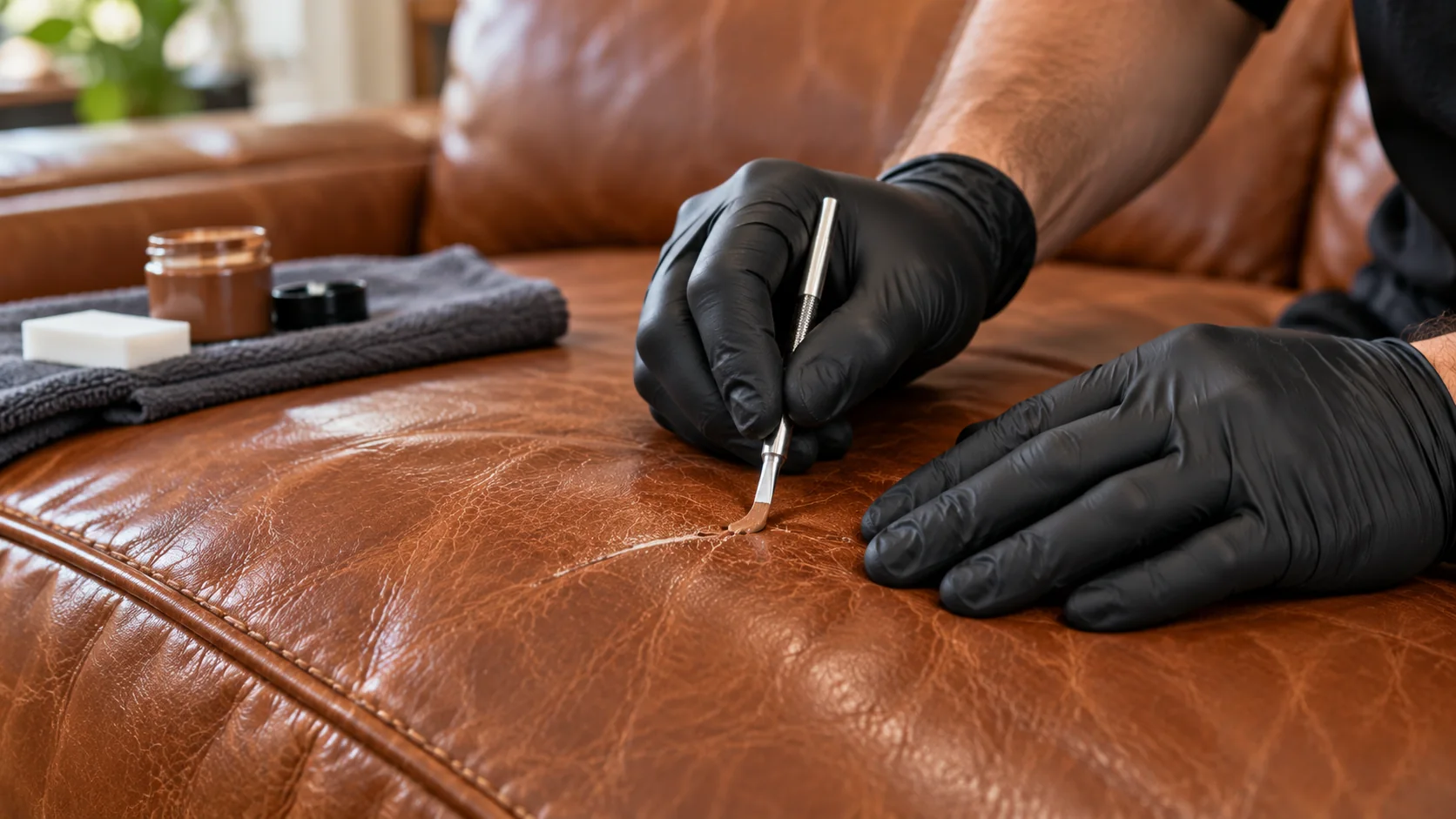
Already tried a spray, a wipe or a store-bought repair kit? Mention it along with your photos. Nobody is judging; it typically means one extra step, not a different job, and it tells us which supplies to plan for.
What our written warranty includes
Each leather repair comes with a written workmanship warranty. Should our work peel, crack or change color with ordinary use, we return and fix it free of charge.
It does not extend to fresh damage, a separate mark somewhere else, or the natural aging of the leather we did not treat. We stand behind the area we worked on; nobody can keep the rest of the hide from getting older.
You also receive photos from before and after the job plus a written summary of the work, which is useful to file away if the piece is insured or owned by a landlord.
How Connecticut seasons wear on leather
In our experience, two things about life in Connecticut homes damage more leather than everyday sitting does, and both are simple to change.

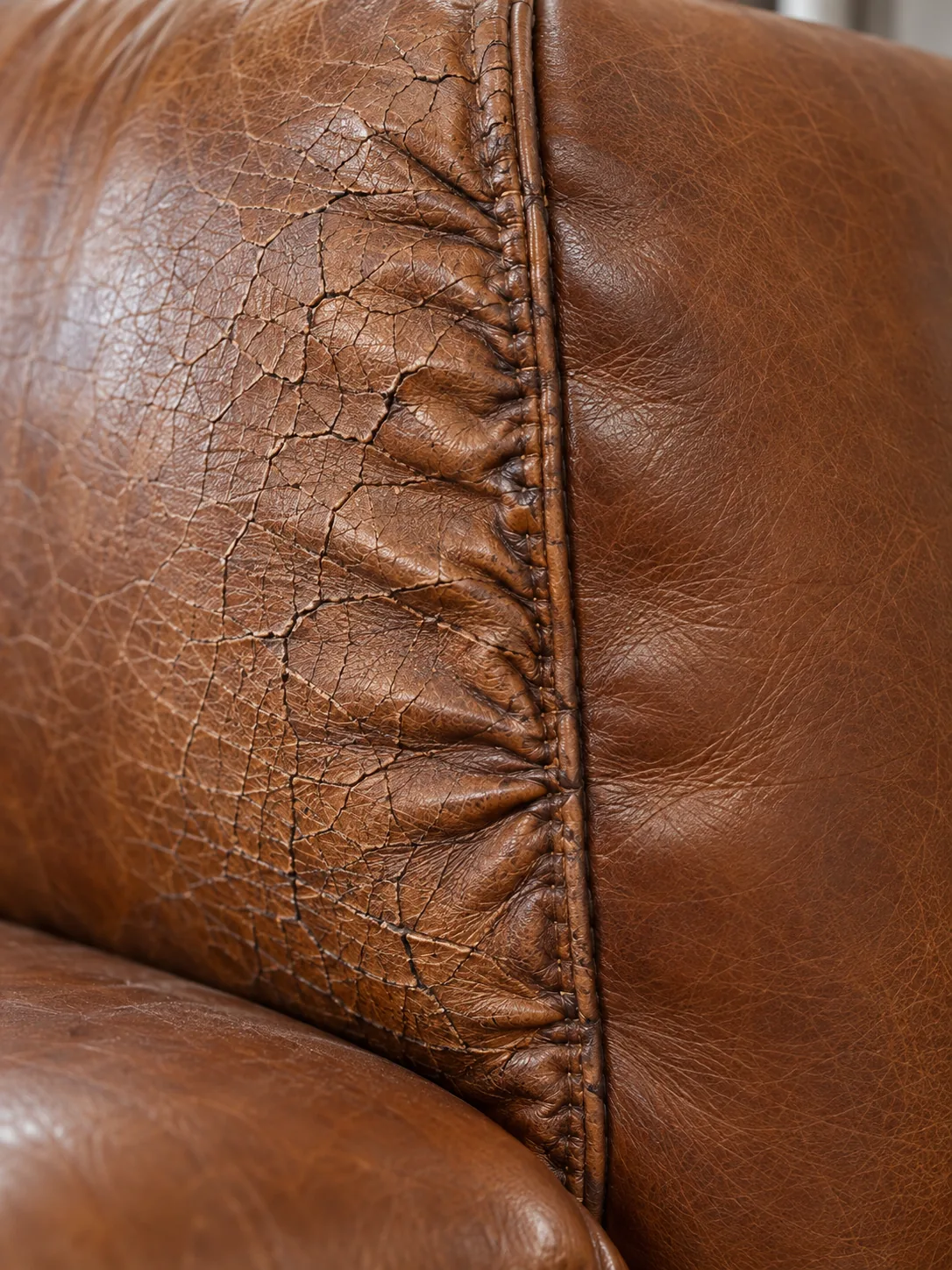

Once November arrives, the heat stays on for about five months, and indoor humidity can fall to 15 to 20 percent when leather does best at 40 to 50. Natural oils leave the hide, the topcoat turns brittle, and cracking shows up first along the front of the seat, where the leather bends the most. Put a sofa twelve inches from a baseboard heater or radiator and that side ages years ahead of the other; often you can spot the dividing line.
Summer flips the problem. In coastal towns from Greenwich to Mystic, damp salty air keeps the leather moist, so anything already on the surface stays wet longer and spreads further. A house shut up for weeks on end does more harm than one where the furniture gets used every day.
You don't need to buy anything to fix either one. Pull the piece eighteen inches away from the heat source, run a humidifier in the room you use most, and turn the cushions so one panel isn't always taking the sun. Those habits help more than any bottled conditioner.
Results from real jobs
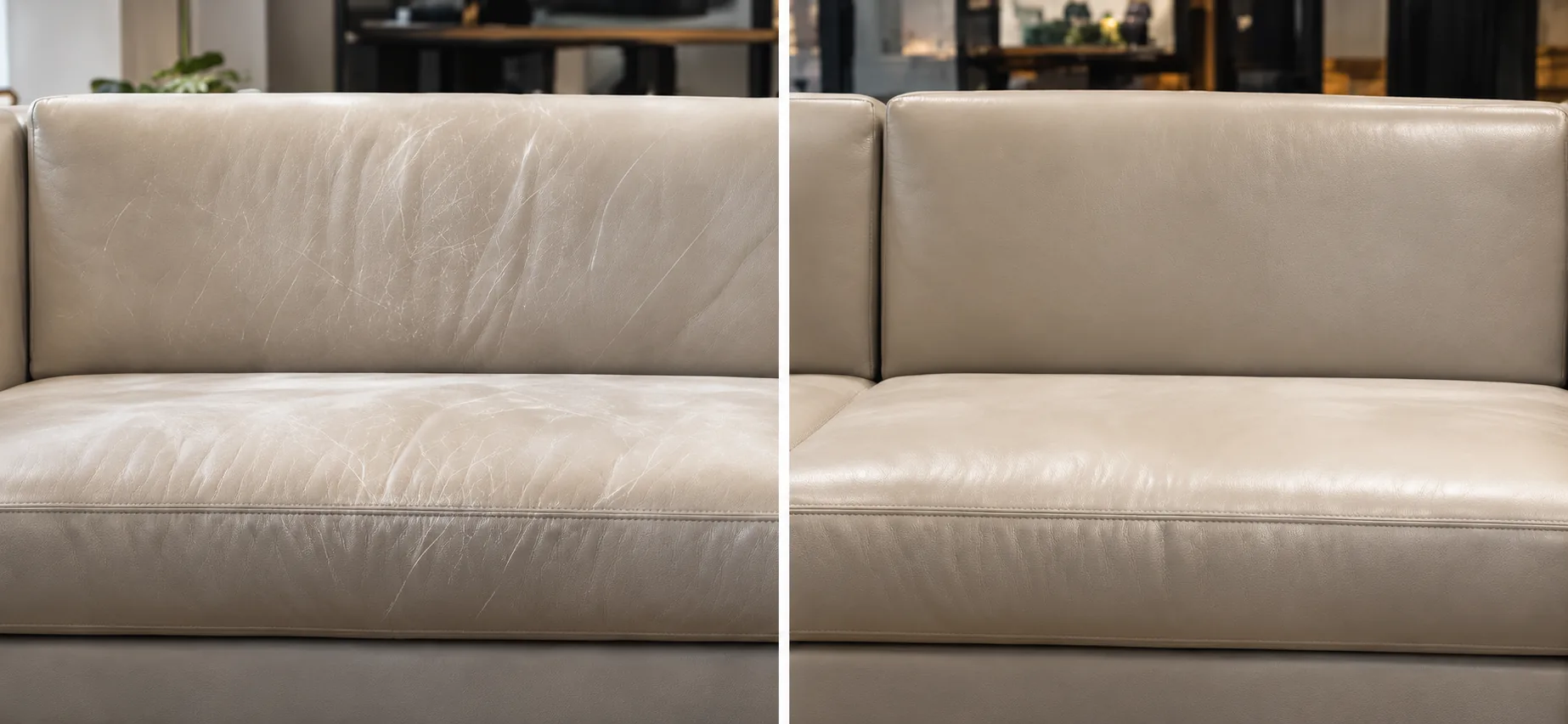
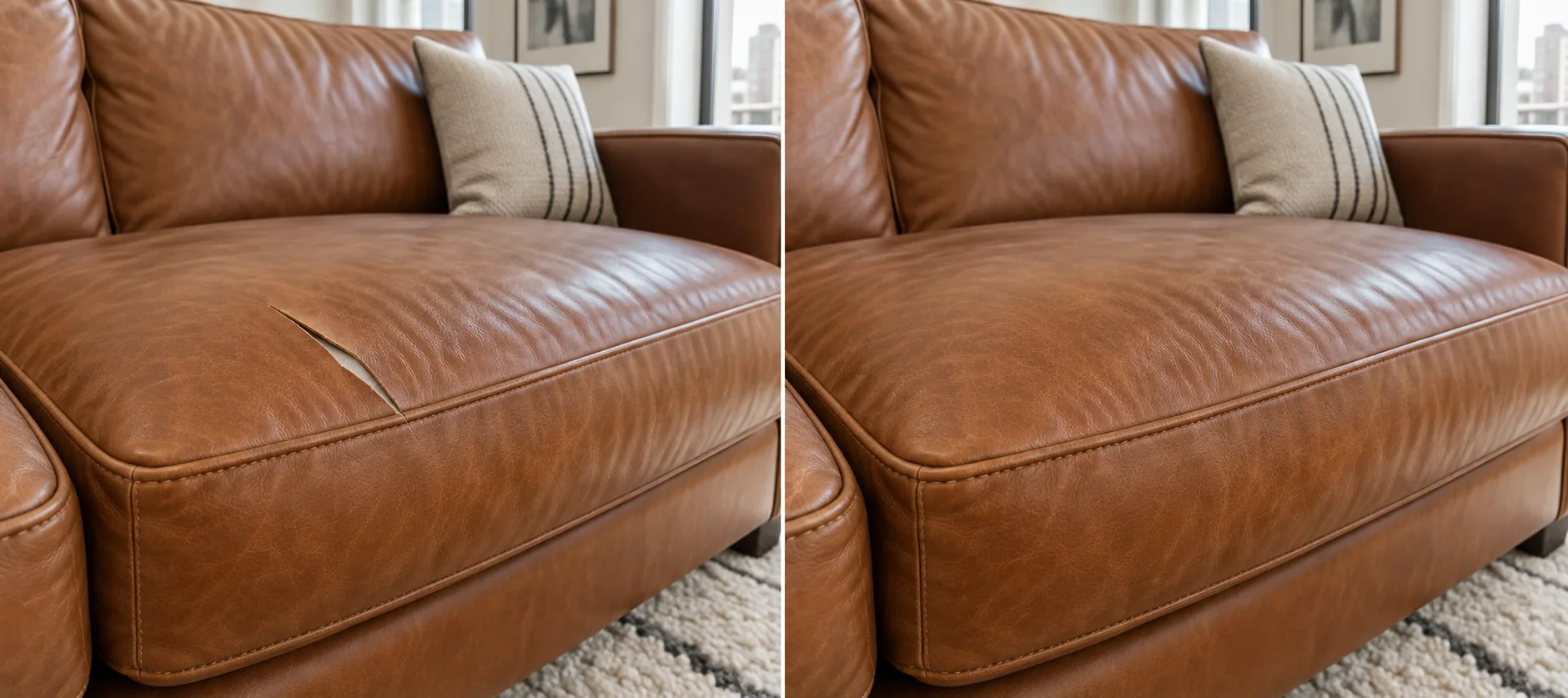
A few leather pieces from our files, shown before and after the work.

Where we work in Connecticut
We take leather repair jobs from every corner of the state, from the Gold Coast to the Litchfield Hills and the Quiet Corner. Older colonials and split-levels often hold a sectional that was assembled inside the room and cannot be carried back down the stairs, so tell us about access when you write.
Questions we hear all the time
Do I need someone to look at it before I get a price?
Rarely. We quote nearly every job from your photos, so there is no inspection to book before you get a number.
How long will the work take?
A typical leather panel takes two to four hours. Restoring a big sectional from end to end can take a full day. After that the sealer needs a night to set before normal use.
Will anyone be able to see the repair?
From a normal viewing distance on pigmented or semi-aniline leather, no. With aniline, a deep mark can sometimes still be found by someone who knows the exact spot, since the color is inside the hide instead of on top of it. We tell you which type you have before starting.
Will the color match perfectly?
We blend the color against your own furniture in the light it sits in. Mixing a shade somewhere else and hoping it fits is how color mismatches happen.
I cleaned it with a household spray. Did I make it worse?
Most likely not. Those products tend to wear down the finish around the damage, which means one extra rebuilding step, not a different job. Tell us the product name so we can plan for it.
Does the quote cost anything?
No. We usually work it out from your pictures, and there is no inspection, deposit or commitment involved.
Should I bother repairing bonded leather?
Generally it won't hold up for long. Bonded material flakes instead of cracking, and once the top starts lifting it keeps going. We can clean it up and give you a straight answer on how much time that gets you.
Can you handle fabric too?
Yes. Fabric cleaning, cushion rebuilds and full fabric reupholstery are all on our service list. We assess it the same way; the techniques differ.
Do you do car seats, boat seats or office chairs?
Yes to all three. We handle auto and marine upholstery, plus commercial seating for offices, restaurants and medical waiting rooms.
How soon can you start?
Most Connecticut leather repair jobs are scheduled within the same week. If you are working against a move-out date or an event, tell us when you call, because we can often move urgent jobs up.
Can landlords or property managers hire you?
Yes. We work unit by unit or across a whole building, and every piece gets written records and photos.
Does repair cost less than buying new?
When the damage is in the finish, nearly always, and usually by a lot. A new piece also has to fit with the furniture around it, while a repaired one already does.
I have a burn and a stain. Can you do both at once?
Yes, and we price them as one job, since both end with the same color work. First the burn is trimmed and filled flush with the surface.
How do I keep this from happening again?
Keep the furniture away from direct heat, aim for about 40 percent humidity in winter, turn the cushions now and then, and blot spills instead of rubbing. That covers most of it.

Show us the damage and we will tell you the fix
Text or email four photos and in most cases you get a leather repair quote back the same day, with a price and the next available date. There is no deposit and no inspection needed first.
You can also email office@leatherrestorepro.com. Every other way to reach us is on our contact page.